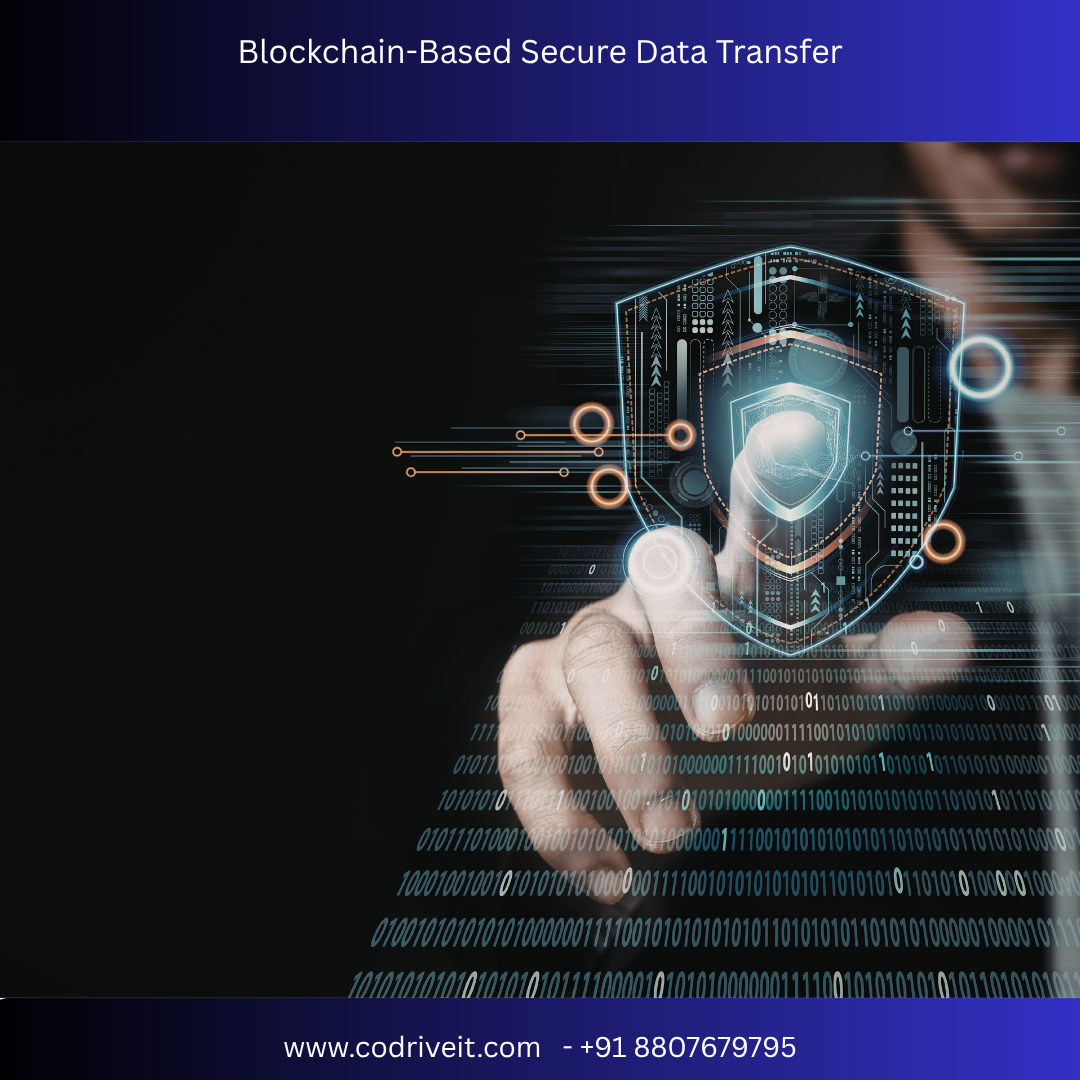

In today’s digital ecosystem, secure data transfer is a top priority for businesses, governments, and individuals. Traditional methods of transferring data often face risks such as breaches, tampering, and unauthorized access.
This is where blockchain-based secure data transfer comes in—offering a decentralized, transparent, and highly secure way to exchange information.
In this guide, we explore how blockchain enhances data security, its benefits, use cases, challenges, and implementation strategies.
Blockchain is a decentralized digital ledger that records transactions across multiple systems in a secure and immutable way.
🔗 Decentralization
🔒 Immutability
👁️ Transparency
🛡️ High Security
Each transaction is stored in a “block” and linked to the previous one, forming a secure chain.
Blockchain-based data transfer involves using blockchain networks to:
Transmit data securely
Verify data authenticity
Prevent unauthorized modifications
👉 Data is encrypted and stored across distributed nodes, ensuring no single point of failure.
Data is encrypted and distributed across multiple nodes.
Once recorded, data cannot be altered.
Eliminates reliance on central authorities.
All transactions are verifiable and traceable.
Secure validation mechanisms prevent unauthorized access.
Secures data before transmission.
Stores data across multiple nodes.
Validates transactions (e.g., Proof of Work, Proof of Stake).
Automates secure data exchange processes.
Ensures data remains unchanged during transfer.
Advanced encryption protects sensitive information.
Eliminates intermediaries, reducing delays.
Reduces operational costs over time.
Provides a transparent and traceable data history.
Secure sharing of patient records.
Safe transfer of financial data and transactions.
Track and verify goods across the supply chain.
Secure exchange of urban data.
Protect industrial data and intellectual property.
Sensitive data is encrypted before transmission.
Data is packaged into a blockchain transaction.
Network nodes validate the transaction using consensus mechanisms.
Validated data is added to the blockchain.
Authorized users can securely access the data.
Solution: Use Layer 2 solutions and optimized networks.
Solution: Adopt energy-efficient consensus mechanisms.
Solution: Use APIs and middleware for seamless integration.
Solution: Ensure compliance with data protection laws.
✔️ Use strong encryption standards
✔️ Choose the right blockchain platform
✔️ Implement access control mechanisms
✔️ Monitor network performance
✔️ Ensure regulatory compliance
Ethereum
Hyperledger
Corda
Blockchain-as-a-Service (BaaS) platforms
A financial institution implemented blockchain for secure data transfer:
🔐 Improved transaction security
⚡ Faster processing times
📊 Enhanced transparency
Integration with AI and IoT
Growth of decentralized applications (dApps)
Increased adoption in government systems
Enhanced privacy-focused blockchain solutions
Blockchain-based secure data transfer is transforming how organizations handle sensitive information. With its decentralized architecture, encryption, and immutability, blockchain offers unmatched security and transparency.
Businesses adopting blockchain today can ensure safer data exchange and gain a competitive edge in the digital landscape.