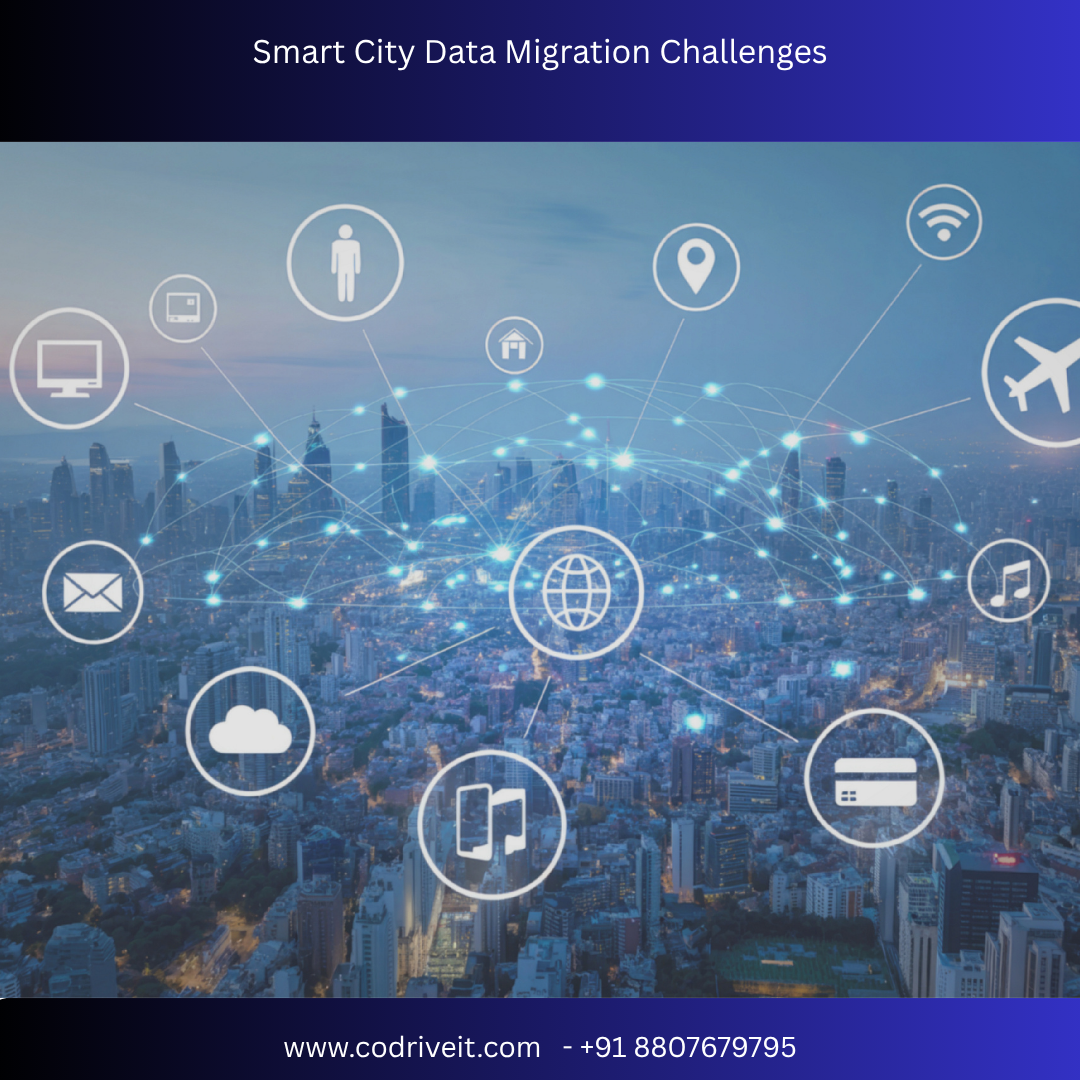

As cities evolve into smart cities, they rely heavily on data from IoT devices, sensors, surveillance systems, and digital platforms. Managing and migrating this massive volume of data is critical for efficient urban operations.
However, smart city data migration comes with unique challenges due to the scale, complexity, and sensitivity of data involved.
In this guide, we explore the major smart city data migration challenges, along with practical solutions and best practices to overcome them.
Smart city data migration refers to the process of transferring urban data from:
Legacy government systems
On-premise infrastructure
Disconnected data silos
👉 Into modern platforms such as cloud systems, data lakes, and integrated smart city solutions.
This enables better decision-making, real-time monitoring, and improved public services.
Supports traffic control, utilities, and emergency services.
Combines multiple data sources into a unified system.
Enhances efficiency in healthcare, transportation, and governance.
Handles growing urban populations and data volumes.
Smart cities generate enormous data from:
IoT sensors
CCTV systems
Smart meters
👉 Managing and migrating this data efficiently is a major challenge.
Solution:
Use scalable cloud storage and data compression techniques.
Data comes from multiple sources in different formats.
Solution:
Implement ETL tools and standardized data formats.
Older systems may not support modern data formats or integrations.
Solution:
Use APIs and middleware to bridge legacy and modern systems.
Sensitive citizen data must be protected during migration.
Solution:
End-to-end encryption
Secure access controls
Compliance with regulations
Transferring large datasets can strain network infrastructure.
Solution:
Use edge computing and incremental migration strategies.
Inconsistent or incomplete data can impact migration success.
Solution:
Perform data cleansing and validation before migration.
Interruptions can affect critical city services.
Solution:
Plan phased migration and use backup systems.
Smart city projects require specialized knowledge.
Solution:
Partner with experienced data migration providers.
Evaluate current systems, data sources, and limitations.
Set clear objectives such as efficiency, scalability, or integration.
Critical vs non-critical data
Structured vs unstructured data
Cloud
Hybrid
Edge computing
Data security policies
Compliance standards
Access controls
Use automation tools
Monitor progress in real-time
Ensure data accuracy
Verify system performance
Optimize performance
Maintain data security
✔️ Use scalable cloud infrastructure
✔️ Adopt edge computing for real-time data
✔️ Ensure strong cybersecurity measures
✔️ Standardize data formats
✔️ Monitor systems continuously
Cloud platforms (AWS, Azure, GCP)
IoT platforms
Data integration tools
ETL tools
Cybersecurity solutions
A smart city project implemented a phased migration strategy:
🚦 Improved traffic management systems
⚡ Faster emergency response times
📊 Enhanced data-driven decision-making
AI-powered data management
5G-enabled real-time data transfer
Edge computing expansion
Advanced data security frameworks
Smart city data migration is a complex but essential process for modern urban development. While challenges such as data volume, security, and integration exist, they can be effectively managed with the right strategies and tools.
By adopting best practices and leveraging modern technologies, cities can unlock the full potential of smart infrastructure and deliver better services to citizens.