
As businesses generate massive volumes of data, traditional migration methods are becoming slow, error-prone, and resource-intensive. Enter AI-driven data migration tools—a smarter, faster, and more efficient way to move data across systems.
By leveraging artificial intelligence and automation, these tools transform how organizations handle complex data migrations, ensuring accuracy, speed, and minimal downtime.
In this guide, we’ll explore the benefits, features, tools, and strategies behind AI-powered data migration.
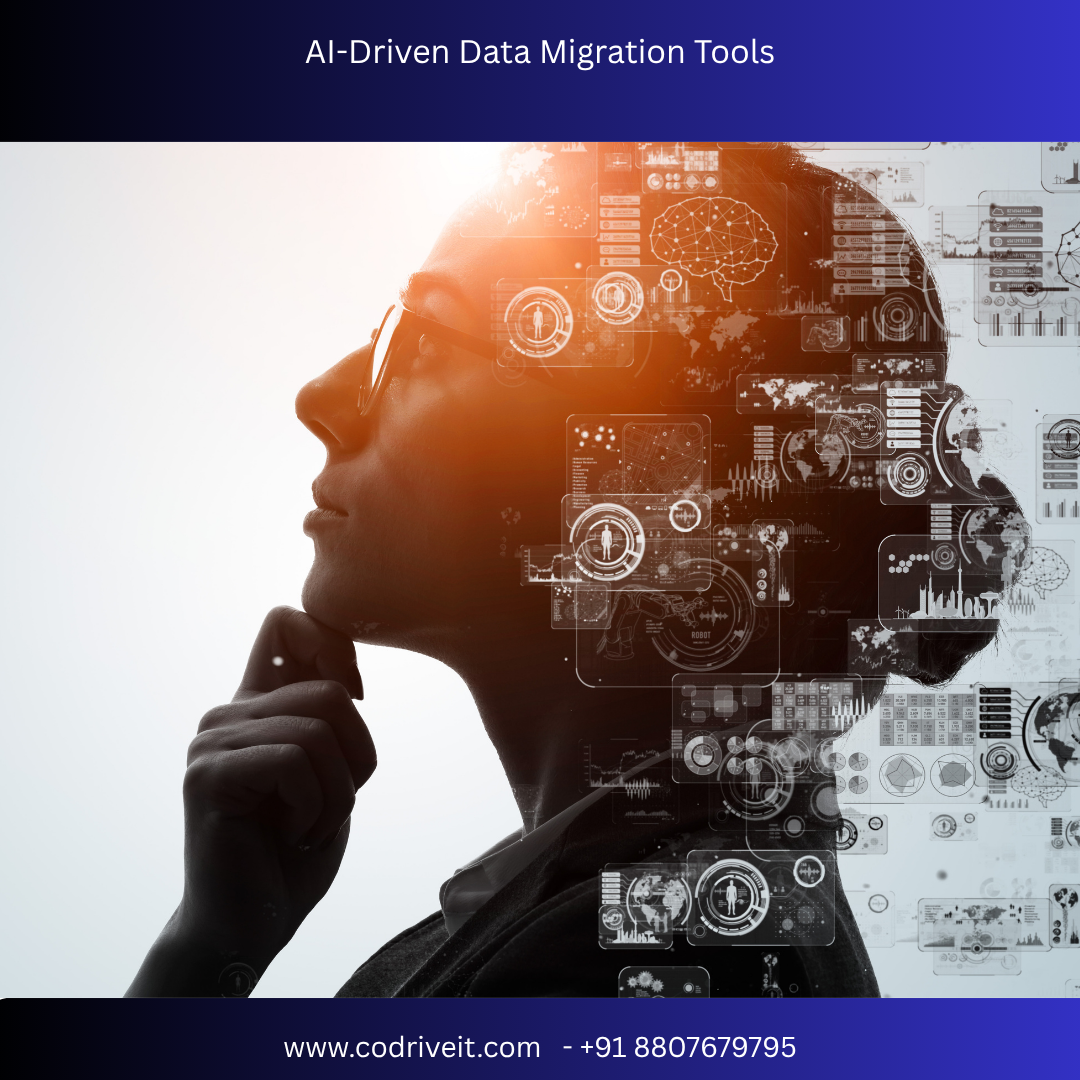
AI-driven data migration tools use artificial intelligence, machine learning, and automation to manage and optimize the migration process.
These tools can:
Automatically map data fields
Detect and fix data inconsistencies
Predict migration risks
Optimize performance in real-time
👉 Result: Faster and more reliable migrations with less manual effort.
Modern systems involve multiple data sources, formats, and integrations.
AI minimizes manual intervention and improves accuracy.
Automation accelerates the entire migration lifecycle.
Less manual work means lower operational costs.
AI identifies potential issues before they occur.
AI automatically maps source data to target systems.
Detects duplicates, inconsistencies, and errors.
Forecasts risks like downtime or data loss.
Reduces manual tasks with end-to-end automation.
Tracks migration progress and performance.
Reduce migration time significantly with automation.
Minimize errors through intelligent validation.
Handle large datasets efficiently.
Ensure business continuity during migration.
Leverage AI insights for optimization.
AI enhances Extract, Transform, Load processes.
AI optimizes resource allocation and cost.
Automates schema conversion and data transfer.
Analyzes dependencies and optimizes deployment.
Identify data sources, formats, and dependencies.
Select tools based on business needs and scalability.
Clean and validate data
Remove duplicates
Standardize formats
Use AI to automate mapping and migration planning.
Automate workflows
Monitor in real-time
Optimize performance
Verify data integrity
Ensure system compatibility
Use AI insights to improve performance
Monitor post-migration systems
Some widely used tools include:
AI-powered ETL platforms
Cloud-native migration tools
Data integration platforms
Machine learning-based analytics tools
Solution: AI automates mapping and transformation.
Solution: Predictive analytics identifies potential issues.
Solution: Automation speeds up the process.
Solution: AI-driven cleansing ensures accuracy.
✔️ Start with a pilot project
✔️ Use high-quality data inputs
✔️ Continuously monitor AI performance
✔️ Combine AI with human oversight
✔️ Ensure compliance and data security
A mid-sized enterprise adopted AI-driven migration tools:
⏱️ 50% faster migration time
📊 Improved data accuracy
💰 Reduced operational costs
Autonomous data migration systems
AI-driven data governance
Real-time adaptive migration
Integration with big data and IoT
AI-driven data migration tools are revolutionizing how businesses handle data transfers. By combining automation, intelligence, and predictive capabilities, these tools ensure faster, safer, and more efficient migrations.
Organizations that adopt AI-powered migration strategies today will gain a significant competitive advantage in the future.