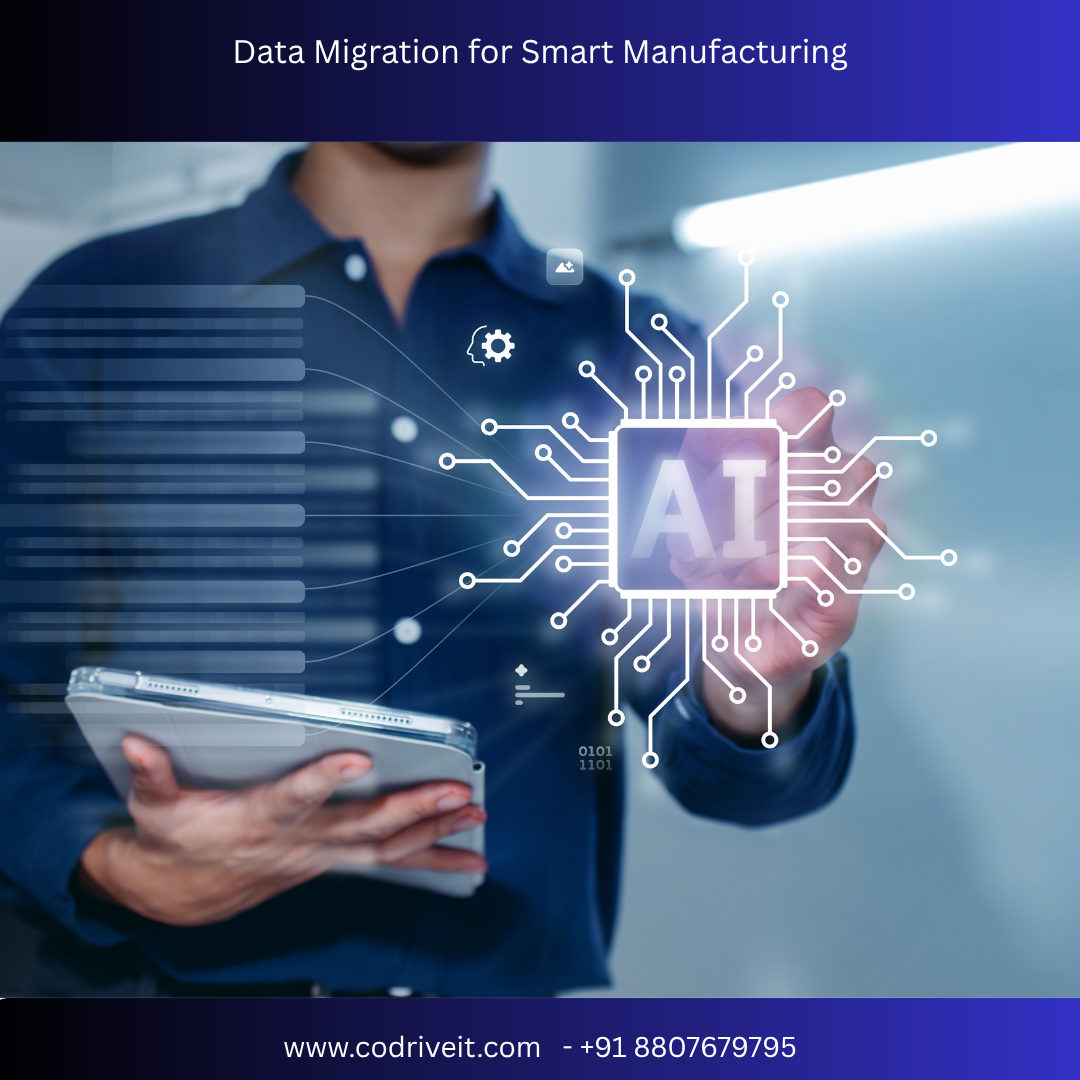

The manufacturing industry is undergoing a massive shift toward smart manufacturing, powered by automation, IoT, AI, and real-time data analytics. At the heart of this transformation lies data migration—the process of moving critical production and operational data from legacy systems to modern digital platforms.
A well-executed data migration strategy for smart manufacturing enables businesses to improve efficiency, reduce downtime, and stay competitive in the Industry 4.0 era.
Smart manufacturing refers to the use of advanced technologies such as:
Industrial IoT (IIoT)
Artificial Intelligence (AI)
Machine Learning (ML)
Cloud Computing
Robotics and Automation
👉 These technologies help manufacturers optimize production processes through real-time data insights.
Data migration in smart manufacturing involves transferring data from:
Legacy ERP systems
On-premise databases
Machine and sensor data sources
Spreadsheets and manual records
👉 Into modern systems like cloud platforms, data lakes, or smart factory solutions.
Modern platforms enable instant insights from production data.
Automated workflows reduce manual intervention.
Analyze machine data to prevent failures before they occur.
Easily expand operations without infrastructure limitations.
Centralized data improves transparency across departments.
Move machine and sensor data to the cloud for centralized processing.
Migrate systems gradually to reduce risk and downtime.
Use streaming technologies to handle continuous data flows.
Store structured and unstructured data in centralized repositories.
Combine on-premise and cloud environments for flexibility.
Evaluate machines, software, and data sources.
Set clear goals such as efficiency, cost reduction, or automation.
Clean and remove duplicate data
Standardize data formats
Validate accuracy
Choose cloud or hybrid solutions based on operational needs.
Design pipelines for smooth data transfer and processing.
Use automation tools
Monitor system performance
Ensure minimal disruption
Verify data integrity
Test production workflows
Monitor system performance
Improve efficiency over time
Solution: Use scalable cloud storage and compression.
Solution: Use integration tools and APIs.
Solution: Implement phased migration and backup strategies.
Solution: Use encryption and secure data transfer protocols.
✔️ Start with a pilot project
✔️ Prioritize critical production data
✔️ Use real-time monitoring tools
✔️ Ensure cybersecurity compliance
✔️ Train employees on new systems
Cloud platforms (AWS, Azure, GCP)
IoT platforms
Data streaming tools (Kafka, Spark)
ETL tools
Industrial automation systems
A manufacturing company migrated its production data to a smart platform:
⚡ 30% reduction in machine downtime
📊 Improved production efficiency
💰 Lower maintenance costs
AI-driven predictive analytics
Digital twins for manufacturing
Edge computing advancements
5G-enabled smart factories
Data migration is the backbone of smart manufacturing transformation. By moving from legacy systems to modern, data-driven platforms, manufacturers can unlock efficiency, scalability, and innovation.
With the right strategy, tools, and execution plan, businesses can successfully transition into the future of manufacturing.