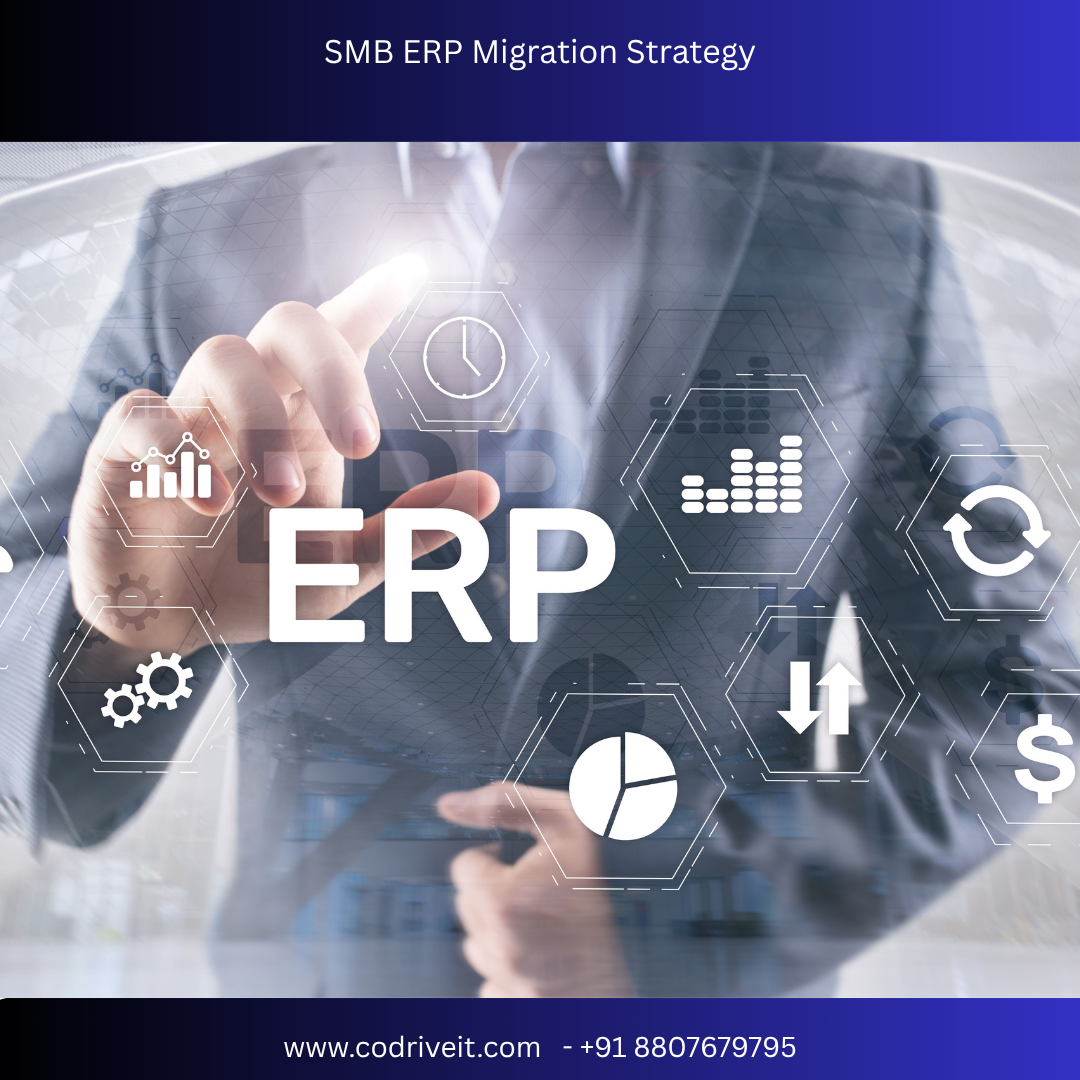

As small and medium-sized businesses (SMBs) grow, managing operations through outdated systems or spreadsheets becomes inefficient. That’s where ERP (Enterprise Resource Planning) migration plays a crucial role.
A well-planned SMB ERP migration strategy helps streamline processes, improve productivity, and support scalable growth. This guide covers everything SMBs need to know to successfully migrate to an ERP system.
ERP migration is the process of transferring:
Business data
Workflows
Applications
👉 From legacy systems or manual processes to a modern ERP platform.
This transition enables businesses to unify operations like finance, HR, inventory, and sales into a single system.
Eliminate data silos and improve accuracy.
Automate repetitive tasks and workflows.
Access real-time reports and analytics.
Support business growth without system limitations.
Reduce operational inefficiencies and manual errors.
Moving from local servers to cloud-based ERP solutions.
Upgrading outdated ERP systems to modern versions.
Switching from one ERP platform to another.
Identify what you want to achieve—efficiency, scalability, or automation.
Analyze existing processes, data quality, and system limitations.
Consider:
Industry-specific features
Scalability
Integration capabilities
Budget
Clean outdated or duplicate data
Standardize formats
Ensure data accuracy
Create a roadmap including:
Timeline
Budget
Resources
Risk management
Use migration tools or experts
Transfer data securely
Maintain data integrity
Verify data accuracy
Test workflows and integrations
Train employees
Monitor system performance
Provide ongoing support
Solution: Backup and validate all data before migration.
Solution: Schedule migration during non-peak hours.
Solution: Provide proper training and change management.
Solution: Plan carefully and track expenses.
✔️ Start with a pilot implementation
✔️ Migrate in phases
✔️ Use automation tools
✔️ Ensure data security and compliance
✔️ Work with experienced ERP consultants
Automation reduces manual workload.
Make faster and smarter decisions.
Improve service and satisfaction.
Streamline all business processes.
Data migration tools
ETL (Extract, Transform, Load) tools
Cloud ERP platforms
Integration tools and APIs
An SMB migrated from manual accounting to a cloud ERP system:
📈 45% improvement in operational efficiency
💰 30% reduction in administrative costs
⚡ Faster reporting and decision-making
AI-powered ERP systems
Cloud-first ERP adoption
Mobile ERP solutions
Advanced analytics integration
An effective SMB ERP migration strategy is essential for businesses aiming to scale and stay competitive. With proper planning, the right tools, and a phased approach, SMBs can achieve a smooth transition and maximize ROI.
Investing in ERP migration today sets the foundation for long-term business success.