
In the era of digital transformation, businesses are rapidly shifting toward Software as a Service (SaaS) solutions to improve efficiency, scalability, and cost-effectiveness. However, adopting SaaS platforms often requires data migration, which can be complex if not planned properly.
This guide explores everything you need to know about SaaS adoption and data migration, including benefits, strategies, challenges, and best practices.
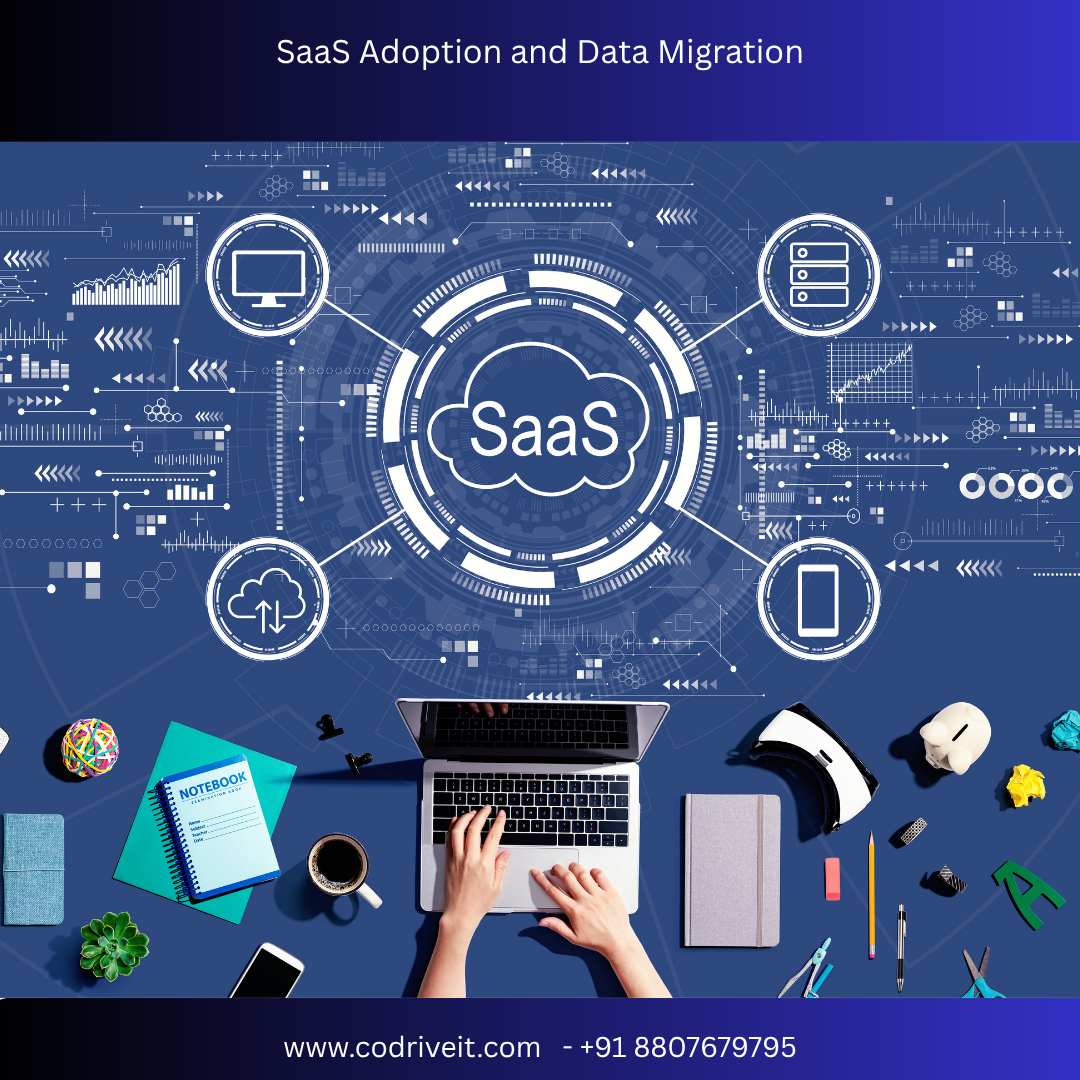
SaaS adoption refers to the process of implementing cloud-based software applications that are hosted and maintained by third-party providers. Instead of installing software locally, businesses access applications via the internet.
CRM systems
ERP platforms
Accounting software
Project management tools
Data migration in SaaS involves transferring data from:
Legacy systems
On-premise databases
Spreadsheets or manual records
👉 Into modern SaaS platforms while ensuring data integrity, security, and minimal downtime.
No need for expensive hardware or maintenance.
Easily scale up or down based on business needs.
Access data anytime, anywhere.
Stay up-to-date without manual intervention.
Quick implementation compared to traditional systems.
Centralized data improves collaboration and decision-making.
Leading SaaS providers offer advanced security features.
Seamlessly integrate with other cloud tools.
Leverage analytics for smarter business strategies.
Moving all systems and data to SaaS platforms.
Migrating specific applications or departments.
Combining on-premise systems with SaaS solutions.
Identify existing systems, data sources, and dependencies.
Clarify what you want to achieve—cost reduction, scalability, or efficiency.
Evaluate features, pricing, and scalability options.
Clean outdated or duplicate data
Standardize formats
Validate data accuracy
Create a roadmap including timelines, resources, and risk management.
Use automated tools or expert services to transfer data.
Ensure all data is migrated correctly and systems function properly.
Train employees to use new SaaS tools effectively.
Solution: Regular backups and validation checks.
Solution: Perform migration during off-peak hours.
Solution: Use APIs and compatible tools.
Solution: Provide proper training and support.
✔️ Start with a pilot project
✔️ Use reliable migration tools
✔️ Ensure data security and compliance
✔️ Monitor performance post-migration
✔️ Work with experienced service providers
ETL (Extract, Transform, Load) tools
Cloud migration platforms
API integration tools
Data validation tools
A growing startup migrated from spreadsheets to a SaaS-based CRM:
📈 50% increase in team productivity
💰 35% reduction in operational costs
⚡ Faster customer response times
The future of SaaS adoption includes:
AI-powered automation
Advanced data analytics
Industry-specific SaaS solutions
Increased focus on cybersecurity
SaaS adoption combined with effective data migration is a powerful strategy for modern businesses. It enhances scalability, reduces costs, and drives innovation.
By following a structured approach and best practices, organizations can ensure a smooth transition to SaaS platforms and unlock long-term success.