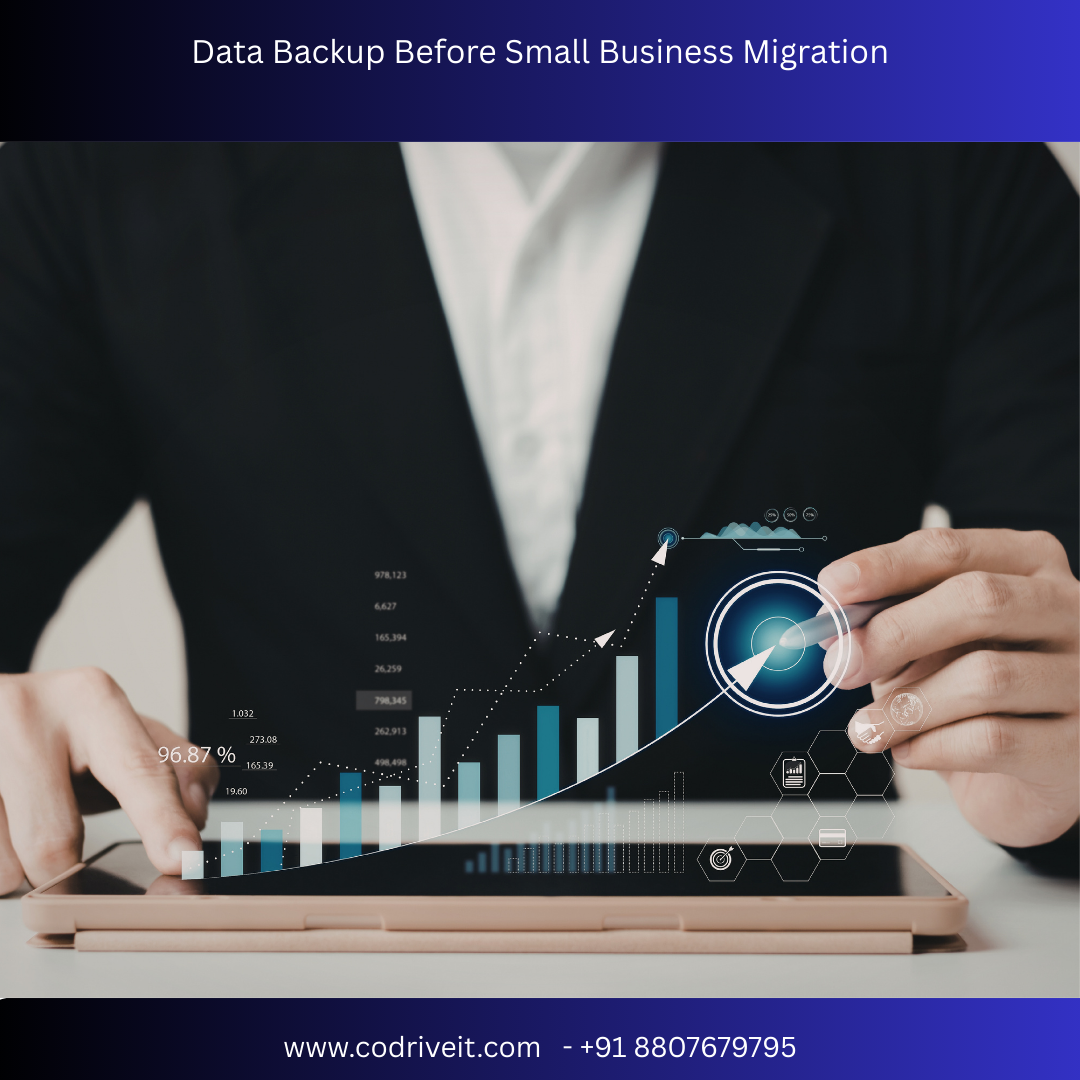

Data migration is a crucial step for small businesses looking to upgrade systems, move to the cloud, or adopt new software. However, one critical step often overlooked is data backup before migration.
Without a proper backup strategy, businesses risk data loss, corruption, and costly downtime. This guide explains why backups are essential and how small businesses can protect their data during migration.
Data backup refers to creating secure copies of your business data before initiating the migration process. These backups act as a safety net, ensuring that data can be restored if anything goes wrong.
Migration errors, system failures, or human mistakes can result in permanent data loss.
Backups allow quick restoration of systems to their original state.
Ensures that your data remains accurate and complete.
Quick recovery reduces business disruption.
Keeps operations running smoothly even in case of failure.
Creates a complete copy of all data.
Pros:
Easy recovery
Complete data protection
Cons:
Requires more storage
Takes longer
Backs up only the data changed since the last backup.
Pros:
Faster
Saves storage
Cons:
Slower recovery process
Backs up data changed since the last full backup.
Pros:
Faster recovery than incremental
Efficient storage use
Stores data on cloud platforms for remote access and security.
Pros:
Scalable
Accessible anywhere
Disaster recovery ready
Determine which data is essential:
Customer records
Financial data
Operational files
Remove:
Duplicate records
Outdated files
Irrelevant data
Select the right type:
Full backup for maximum safety
Incremental for efficiency
Ensure:
Encryption
Access control
Compliance with regulations
Verify that backup files can be restored successfully.
Use multiple locations:
On-premise storage
Cloud storage
Maintain updated backups throughout the migration process.
Small businesses can use reliable tools such as:
Acronis
Veeam
Carbonite
AWS Backup
Google Cloud Backup
Choose tools based on budget, scalability, and ease of use.
Always test backups before migration.
Use multiple backup locations for safety.
Unsecured backups can lead to data breaches.
Plan backups well in advance.
✅ Perform full backup before migration
✅ Use automated backup tools
✅ Store backups in multiple locations
✅ Encrypt sensitive data
✅ Document backup procedures
A small business migrating to a cloud ERP system avoided major data loss by implementing a robust backup strategy. When migration errors occurred, they restored data within hours, preventing downtime and financial loss.
✅ Zero data loss risk
✅ Faster recovery time
✅ Increased confidence during migration
✅ Improved data security
✅ Business continuity
Data backup is not just a precaution—it is a necessity for any successful migration. Small businesses must prioritize backup strategies to ensure data safety, minimize risks, and maintain smooth operations.
By following this guide on data backup before small business migration, you can protect your business from unexpected challenges and ensure a seamless transition.