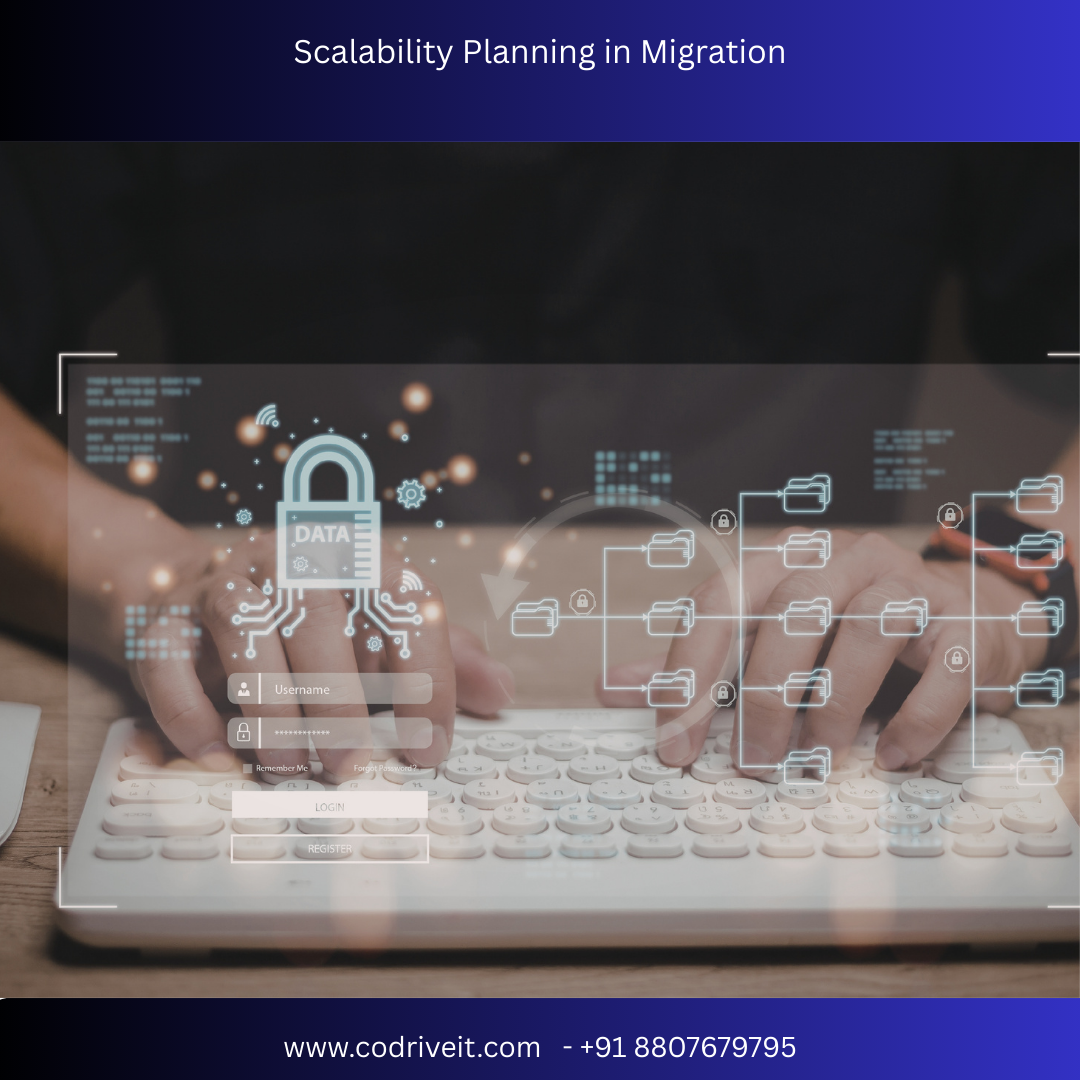

As organizations move their applications, databases, and infrastructure to modern platforms, scalability planning in migration becomes a critical factor for long-term success. Migration is not just about transferring data or applications from one system to another—it is also about ensuring that the new environment can support future growth, increasing workloads, and evolving business needs.
Without proper scalability planning, migrated systems may struggle with performance issues, resource limitations, and increased operational costs. This guide explains how organizations can effectively plan for scalability during migration to build resilient and future-ready systems.
Scalability planning in migration refers to designing the target system architecture so that it can efficiently handle increased workloads, users, and data volumes after migration. The goal is to ensure that systems can scale up or scale out without major disruptions.
Scalability planning typically involves evaluating infrastructure, application architecture, databases, and network capacity to ensure the new environment supports future expansion.
Migration projects often focus on transferring systems quickly, but ignoring scalability can lead to serious long-term problems.
As businesses grow, their systems must handle more users, transactions, and data. Scalable systems ensure smooth expansion without major infrastructure changes.
Proper scalability planning ensures systems maintain high performance even during peak workloads.
Scalable architectures allow organizations to add resources only when needed, avoiding unnecessary infrastructure expenses.
Systems designed for scalability can distribute workloads efficiently, reducing the risk of failures.
Modern scalable platforms support emerging technologies such as cloud computing, big data analytics, and artificial intelligence.
Understanding different types of scalability helps organizations design better migration strategies.
Vertical scalability involves increasing the power of existing servers by adding more CPU, memory, or storage resources.
Horizontal scalability distributes workloads across multiple servers or nodes. This approach is widely used in cloud environments and microservices architectures.
Elastic scalability allows systems to automatically increase or decrease resources based on workload demand, which is common in cloud platforms.
Several important factors influence the scalability of migrated systems.
Applications should be designed using scalable architectures such as microservices or containerized environments.
Efficient database structures and indexing strategies improve scalability and performance.
Cloud-based infrastructure often provides better scalability compared to traditional on-premise systems.
Network bandwidth and latency must support increasing data traffic.
Organizations must estimate how quickly their data will grow over time.
Evaluate the existing infrastructure, applications, and database performance to identify limitations.
Estimate future growth in users, transactions, and data volumes.
Select migration approaches such as rehosting, replatforming, or refactoring depending on scalability requirements.
Adopt architectures that support load balancing, distributed computing, and modular system components.
Use monitoring tools and automation systems to manage resources efficiently.
Perform load and stress testing to ensure the system can handle increased workloads.
Organizations can follow several best practices to ensure scalable migration outcomes.
Cloud platforms offer built-in scalability features such as auto-scaling and resource allocation.
Breaking applications into smaller services improves flexibility and scalability.
Load balancers distribute traffic across multiple servers, improving performance and reliability.
Use indexing, caching, and partitioning techniques to improve database scalability.
Real-time monitoring helps detect performance issues before they impact users.
Despite careful planning, organizations may encounter several challenges.
Legacy applications not designed for scalable environments
Data architecture limitations
Budget constraints for infrastructure upgrades
Lack of scalability testing before deployment
Managing hybrid cloud environments
Addressing these challenges early helps ensure smoother migration and system growth.
Technology advancements are transforming how organizations design scalable systems.
Cloud-native solutions allow organizations to build highly scalable and flexible applications.
Containers enable faster deployment and efficient resource management.
Serverless platforms automatically scale infrastructure based on application demand.
Artificial intelligence tools can predict resource requirements and optimize infrastructure scaling.
Scalability planning is an essential part of any successful migration strategy. By designing systems that can handle increasing workloads and data growth, organizations ensure long-term performance, reliability, and cost efficiency.
A well-planned scalable architecture allows businesses to adapt quickly to changing demands while supporting innovation and digital transformation.