
Data migration is a critical step when organizations move data between systems, databases, or cloud platforms. However, the success of a migration project does not end once the data transfer is complete. A well-planned Post-Migration Support Strategy ensures system stability, data accuracy, and uninterrupted business operations after migration.
In this guide, we will explore the importance of post-migration support, key components of a strong strategy, best practices, and how organizations can ensure long-term success after migrating their data.
Post-migration support refers to the process of monitoring, maintaining, and optimizing systems after a data migration project is completed. It involves validating data integrity, resolving system issues, ensuring application compatibility, and providing ongoing technical support.
Without proper post-migration support, organizations may face:
Data inconsistencies
System downtime
Integration failures
User adoption issues
Performance bottlenecks
A strong post-migration support plan helps businesses minimize these risks and ensures the new system functions efficiently.
After migration, data must be verified to confirm it has been transferred accurately. Post-migration support includes validation processes that detect missing, corrupted, or duplicated records.
New environments can introduce unexpected compatibility or performance issues. Continuous monitoring helps identify and resolve problems before they impact operations.
Post-migration optimization ensures that databases, applications, and servers run efficiently in the new environment.
Employees may need assistance adapting to new systems. Training and support improve productivity and reduce resistance to change.
Immediate support ensures that critical business processes continue smoothly after the migration process.
After migration, teams should perform detailed checks to ensure data accuracy. This includes:
Record count verification
Data reconciliation
Format and structure validation
Random data sampling
These processes confirm that all data has been successfully transferred.
Continuous monitoring helps identify system issues quickly. Key monitoring activities include:
Server performance monitoring
Database response time tracking
Error log analysis
System usage monitoring
Tools for automated monitoring can help IT teams quickly detect performance problems.
Even with proper planning, minor issues may occur after migration. A structured support process should include:
Dedicated support teams
Incident tracking systems
Root cause analysis
Quick bug fixes and patches
This ensures problems are resolved quickly without affecting operations.
Users may encounter challenges when using a new system. Providing training and support improves adoption and productivity.
Effective user support includes:
Help desk support
Training sessions
User manuals and documentation
FAQ resources
Post-migration support should include security checks to ensure data remains protected in the new system. This includes:
Access control verification
Security patch updates
Compliance audits
Data encryption validation
A backup strategy ensures data protection after migration. Organizations should implement:
Automated backups
Disaster recovery plans
Regular backup testing
Data restoration procedures
Most organizations implement a 30- to 90-day post-migration support period where teams actively monitor system performance and resolve issues.
A specialized team ensures faster response times for technical issues and user concerns.
Maintaining proper documentation helps teams learn from challenges and improve future migration projects.
Periodic audits help ensure data accuracy, security compliance, and optimal system performance.
Feedback from employees and stakeholders helps identify usability issues and areas for improvement.
Even with proper planning, organizations may encounter challenges such as:
Data mismatch between systems
Application integration failures
Performance slowdowns
Security vulnerabilities
User resistance to new systems
A structured support strategy ensures these issues are resolved efficiently.
Organizations should follow a checklist to ensure successful post-migration operations:
Validate migrated data
Monitor system performance
Fix migration errors
Provide user support
Review security controls
Implement backup strategies
Conduct performance optimization
This checklist helps ensure that all critical aspects of post-migration support are addressed.
Modern technologies are improving post-migration support strategies. Businesses are increasingly using:
AI-driven monitoring tools
Automated error detection systems
Cloud-based performance analytics
Predictive maintenance technologies
These innovations help organizations detect and resolve issues faster while maintaining system efficiency.
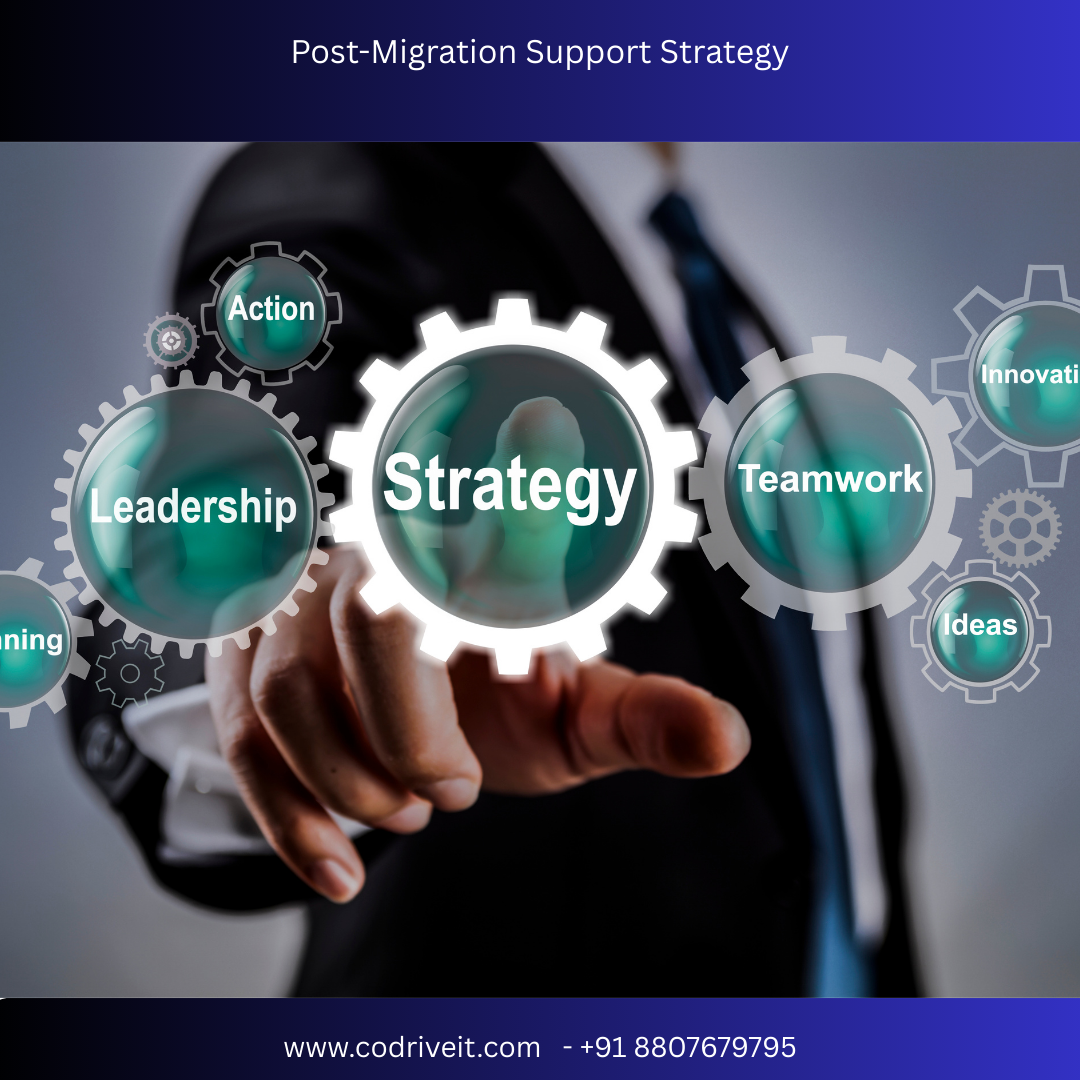
A successful data migration project does not end with transferring data to a new system. Implementing a strong Post-Migration Support Strategy ensures system stability, data integrity, and smooth business operations.
By focusing on data validation, system monitoring, issue resolution, security management, and user support, organizations can maximize the value of their migration projects and ensure long-term success.
Investing in post-migration support not only protects business data but also enhances system performance and user satisfaction.