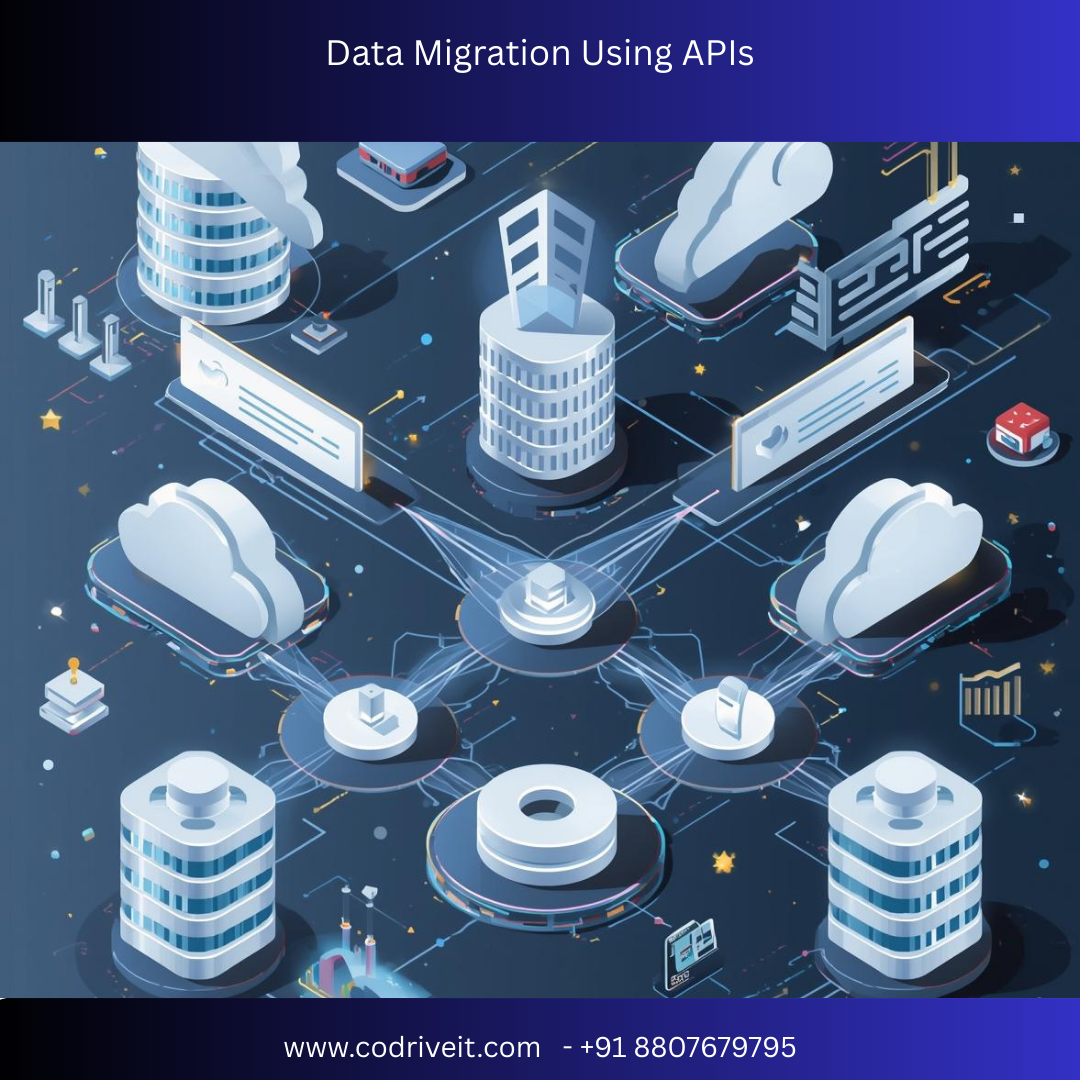

In today’s digital transformation era, businesses frequently migrate data between applications, databases, and cloud platforms. Data migration using APIs (Application Programming Interfaces) has become one of the most efficient and scalable methods for transferring data between systems. APIs allow organizations to automate data transfers, maintain data integrity, and integrate multiple platforms seamlessly.
This guide explains what API-based data migration is, how it works, its benefits, challenges, and best practices for successful implementation.
Data migration using APIs refers to the process of transferring data from one system to another using structured API endpoints provided by applications or services. Instead of exporting and importing files manually, APIs allow systems to communicate directly and exchange data in real time.
APIs typically use formats such as:
JSON
XML
RESTful services
SOAP protocols
This approach is widely used in CRM migration, ERP migration, SaaS application migration, cloud data migration, and database synchronization.
The API migration process involves multiple steps that ensure data is transferred securely and accurately.
The first step is identifying the source system where the existing data resides. This could be:
Legacy databases
CRM platforms
ERP systems
Cloud storage platforms
The system must support API access to retrieve data.
The destination system must also have APIs available for receiving and storing data. Proper authentication methods such as API keys or OAuth tokens are configured during this stage.
Data mapping defines how fields in the source system correspond to fields in the target system.
Example:
| Source Field | Target Field |
|---|---|
| customer_name | client_name |
| email_address | |
| phone_number | contact_number |
This ensures compatibility between both systems.
Using API endpoints, the migration tool fetches data from the source system.
Example API request:
GET /api/v1/customers
The response may return customer data in JSON format.
Before inserting data into the new system, transformation may be required. This includes:
Data formatting
Field conversion
Data cleansing
Removing duplicates
The processed data is then pushed to the target system using API requests such as:
POST /api/v1/customers
This step completes the migration process.
API-based migration eliminates manual data transfer, reducing human errors and saving time.
APIs enable real-time or near real-time data transfer between systems.
Organizations can migrate large volumes of data efficiently with automated scripts or integration tools.
Structured data exchange formats like JSON ensure consistent and accurate data transfer.
APIs enable seamless integration between cloud platforms, enterprise software, and third-party services.
Businesses across industries use APIs for data migration.
Migrating customer data between CRM platforms while maintaining contact history.
Transferring financial, inventory, and operational data during ERP upgrades.
Moving application data when switching from one SaaS provider to another.
Migrating databases and application data to cloud platforms.
Transferring products, customers, and order history between online store platforms.
Despite its advantages, API migration also presents some challenges.
Some systems restrict the number of API calls per minute, which can slow down migration.
Different systems may use different structures, requiring transformation logic.
Secure API authentication mechanisms such as OAuth can add configuration complexity.
Invalid or incomplete data can cause migration failures.
Define a clear migration plan including timelines, data sources, and target systems.
Clean and validate data before migration to avoid transferring duplicate or incorrect records.
Instead of migrating everything at once, migrate data in batches to reduce system load.
Use logging and retry mechanisms to handle failed API requests.
Conduct testing in staging environments before executing the final migration.
Verify that all records are correctly transferred and functioning in the new system.
Many tools help automate API-driven data migration:
ETL tools
Integration platforms
Custom scripts using Python, Node.js, or PHP
Cloud integration services
These tools streamline extraction, transformation, and loading processes.
With the growth of cloud computing, microservices, and SaaS platforms, API-driven data migration is becoming the standard approach. Modern systems are increasingly designed with API-first architectures, enabling faster integrations and smoother migrations.
Technologies such as AI-powered migration tools, automated schema mapping, and real-time integration platforms are further simplifying the process.
Data migration using APIs offers a modern, scalable, and efficient way to transfer data between systems. By leveraging APIs, organizations can automate complex migrations, maintain data accuracy, and enable seamless integration across digital platforms.
Businesses planning a migration project should follow structured planning, proper data mapping, and rigorous testing to ensure a smooth transition. With the right strategy and tools, API-based data migration can significantly improve operational efficiency and support long-term digital growth.