
In the era of digital transformation, organizations are increasingly adopting Human Resource Management Systems (HRMS) to streamline HR operations, improve workforce management, and enhance employee experiences. When companies upgrade or replace their HR software, data migration for HRMS systems becomes a critical step to ensure that all employee records, payroll details, and organizational data are transferred securely and accurately.
A well-planned HRMS data migration process helps businesses maintain data integrity, reduce operational disruption, and ensure compliance with labor and data protection regulations.
This guide explains the importance, process, challenges, and best practices of HRMS data migration.
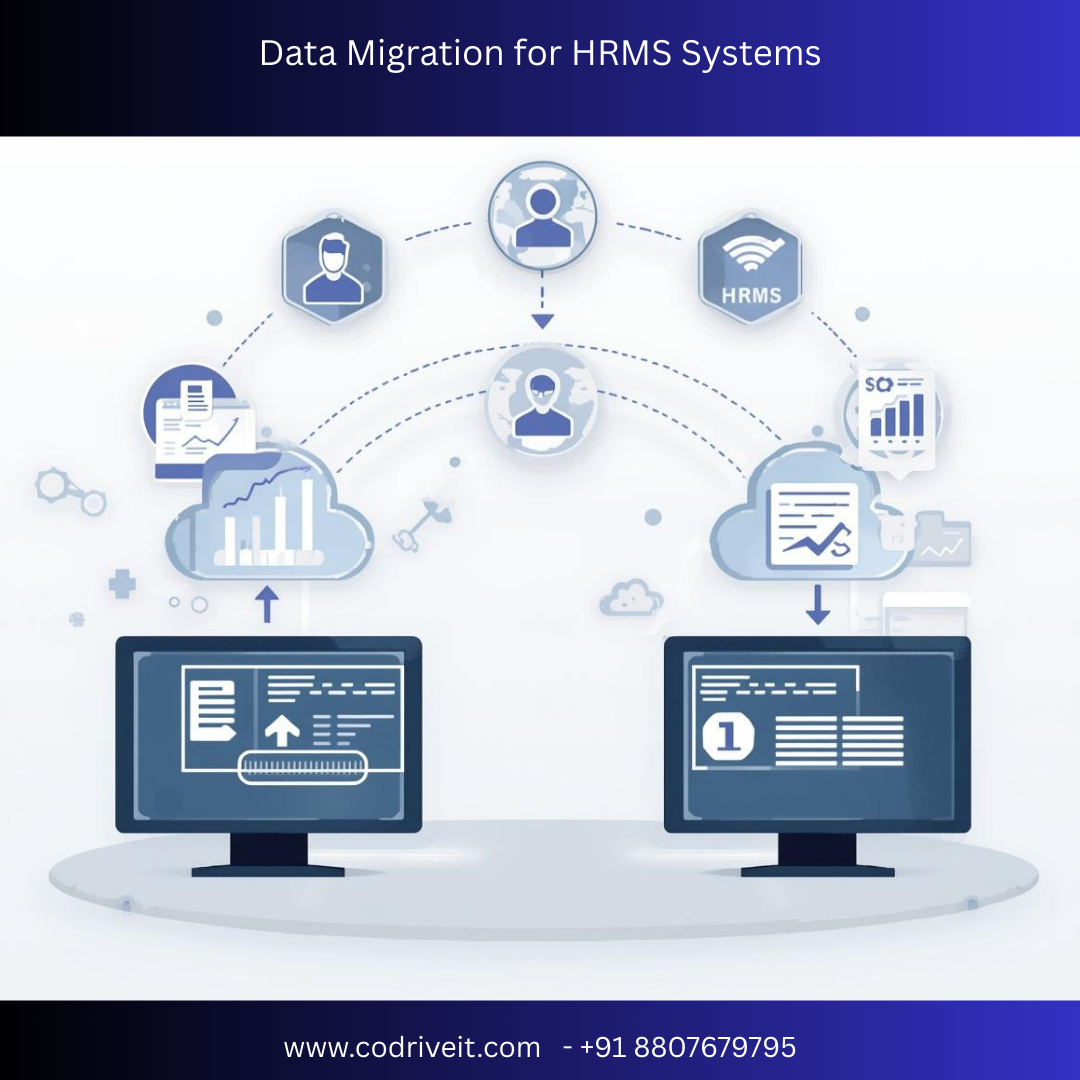
HRMS data migration refers to the process of transferring HR-related data from legacy systems, spreadsheets, or other HR platforms into a new HRMS platform.
The migration process ensures that important HR records such as employee information, payroll history, benefits, attendance, and performance data are preserved when transitioning to a new system.
Modern HR platforms provided by companies like Workday, SAP, Oracle, and Zoho require structured and accurate data migration to function effectively.
HR data is one of the most sensitive and critical datasets in any organization. A successful migration ensures that HR teams can continue managing employees without disruptions.
Migrating to a modern HRMS allows organizations to store all employee records in a centralized database.
This includes:
Personal information
Employment history
Compensation details
Attendance and leave records
Performance reviews
Modern HRMS platforms automate routine tasks such as:
Payroll processing
Leave management
Employee onboarding
Performance tracking
Migrating data ensures these processes continue seamlessly.
Legacy HR systems often lack modern security features. Migrating to cloud-based HRMS platforms provides stronger security, encryption, and compliance features.
Organizations must maintain accurate employee records to comply with labor laws, tax regulations, and internal audit requirements. HRMS migration ensures that historical data remains accessible and compliant.
HRMS migration typically includes several types of organizational data.
Basic employee details such as:
Employee ID
Name
Address
Contact information
Date of joining
Job designation
Department
Payroll-related information including:
Salary structure
Tax details
Payment history
Bonuses and incentives
Historical attendance data such as:
Working hours
Leave balances
Holiday calendars
Overtime records
Employee evaluation information including:
Performance reviews
Ratings
Training records
Promotion history
Additional employee-related information like:
Insurance details
Retirement benefits
Compliance documentation
HRMS data migration can be complex due to the sensitivity and structure of HR data.
Legacy systems may contain:
Duplicate employee records
Incomplete information
Incorrect data formats
These issues must be resolved before migration.
Different HR systems use different data structures, requiring careful mapping between source and destination fields.
HR data includes confidential employee information. Proper encryption and access control are required during migration.
Improper migration planning can interrupt HR operations such as payroll processing or employee self-service portals.
A structured approach ensures smooth HRMS migration with minimal risk.
The first step is analyzing the existing HR data and system structure.
This includes:
Identifying data sources
Evaluating data quality
Determining migration scope
Creating a migration roadmap
Before migrating, data must be cleaned and standardized by:
Removing duplicate records
Fixing missing values
Standardizing formats
Correcting inconsistencies
This ensures higher data accuracy in the new system.
Data fields from the legacy system must be mapped to corresponding HRMS fields.
For example:
| Legacy System Field | HRMS Field |
|---|---|
| Emp_Name | Employee Name |
| Dept_Code | Department |
| Salary_Amount | Base Salary |
| Leave_Count | Leave Balance |
Sometimes data transformation is required to match the structure of the new HRMS.
Once data preparation is complete, the migration process begins.
Common migration methods include:
CSV file imports
ETL (Extract, Transform, Load) tools
API-based migration
Custom scripts
Testing ensures that all data has been migrated accurately.
This includes verifying:
Employee records
Payroll history
Leave balances
System integrations
Any errors detected during testing must be corrected before final deployment.
After successful testing, the new HRMS system is launched.
Organizations should monitor system performance and validate data accuracy during the initial weeks after migration.
Organizations can ensure a smooth migration process by following these best practices.
Always maintain a complete backup of legacy HR data before starting migration.
Large organizations may migrate data in phases to reduce risk and downtime.
Implement encryption, role-based access control, and secure transfer protocols.
Proper documentation helps with auditing and troubleshooting.
Provide training to HR staff so they can effectively use the new HRMS system.
Once migration is completed successfully, organizations gain several advantages.
HR teams can access employee records quickly and securely.
Modern HRMS platforms provide analytics and reporting capabilities for workforce planning.
Tasks such as payroll processing, onboarding, and leave management become automated.
Employees can access self-service portals for updating personal information, applying for leave, and viewing payroll details.
Data migration for HRMS systems is a crucial step when organizations upgrade their HR technology. A well-planned migration strategy ensures that sensitive employee data is transferred securely while maintaining accuracy and compliance.
By implementing proper data cleansing, mapping, testing, and security practices, businesses can successfully transition to modern HRMS platforms and unlock powerful HR automation capabilities.
Organizations that invest in professional HRMS data migration services can minimize risks, reduce downtime, and ensure a seamless transition to a modern human resource management environment.