
In today’s competitive digital landscape, businesses rely heavily on Customer Relationship Management (CRM) systems to manage customer interactions, automate marketing campaigns, and track sales pipelines. As organizations modernize their technology stack, many are migrating their business data to HubSpot, one of the most powerful cloud-based CRM platforms available today.
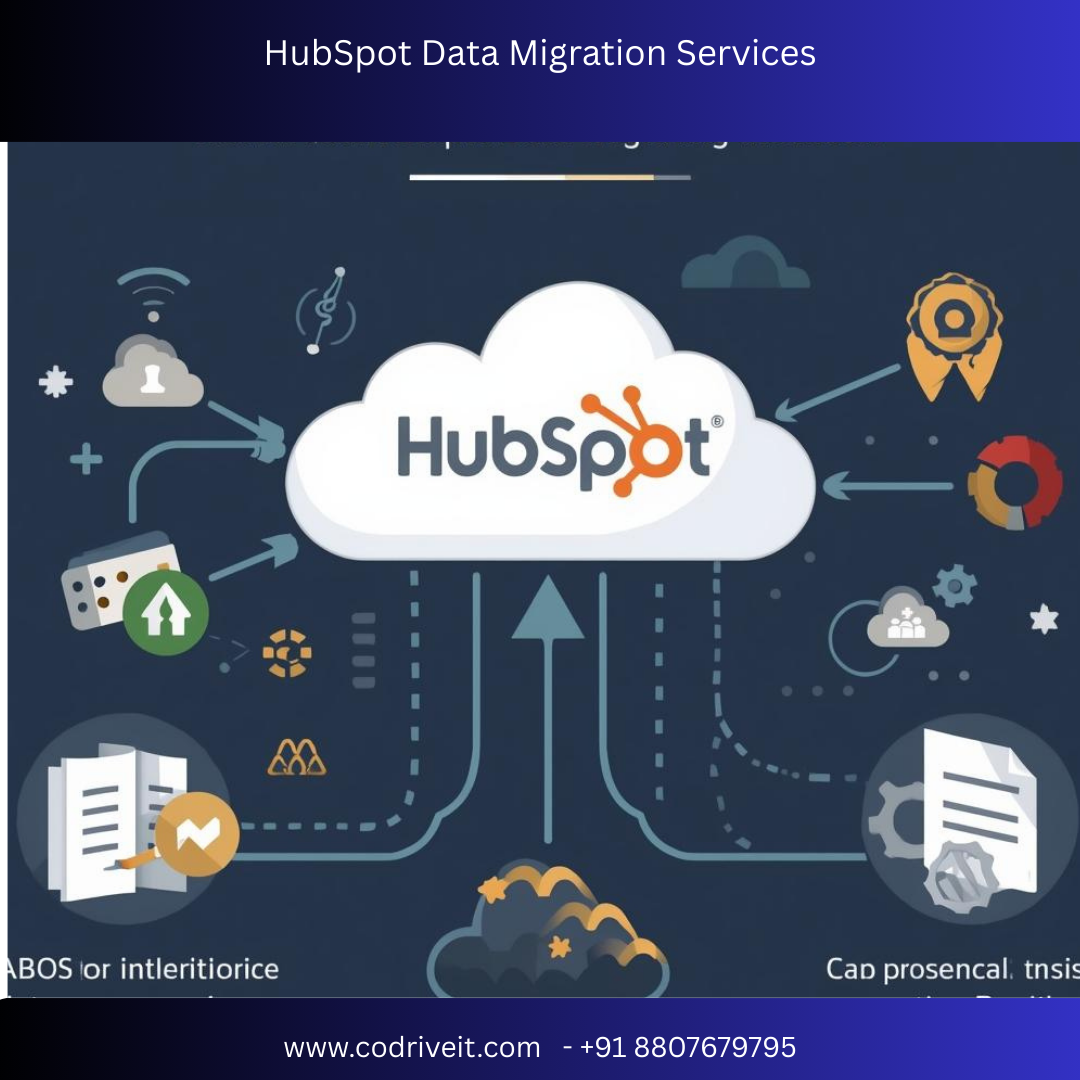
HubSpot Data Migration Services help businesses securely transfer data from legacy systems, spreadsheets, or other CRM platforms into HubSpot while ensuring accuracy, consistency, and minimal disruption to operations.
This guide explains everything you need to know about HubSpot data migration, including benefits, migration process, challenges, and best practices.
HubSpot Data Migration is the process of transferring business data such as contacts, companies, deals, emails, activities, and historical records from existing systems into the HubSpot CRM platform.
Data sources for migration may include:
Legacy CRM systems
Spreadsheets (Excel or Google Sheets)
Marketing automation platforms
Sales databases
Customer support systems
The goal of migration is to centralize customer data inside HubSpot to improve marketing automation, sales management, and customer service workflows.
HubSpot has become one of the most widely used CRM platforms because it offers a comprehensive ecosystem for sales, marketing, and customer service management.
Key advantages include:
HubSpot integrates multiple tools such as:
Marketing automation
Sales pipeline management
Customer service support
Email marketing
Analytics and reporting
This unified platform helps businesses streamline their operations.
Since HubSpot is cloud-based, teams can access customer data anytime and from anywhere, improving collaboration between departments.
HubSpot allows businesses to automate tasks such as:
Lead nurturing
Email campaigns
Workflow automation
Follow-up reminders
Automation reduces manual workload and improves productivity.
Whether you're a startup or a large enterprise, HubSpot scales easily with business growth.
During migration, several types of business data are transferred into HubSpot.
Customer and lead information including:
Name
Phone number
Address
Communication history
Business details associated with contacts such as:
Company name
Industry
Website
Revenue
Location
Sales pipeline information including:
Deal stage
Deal value
Close date
Sales representative
Historical interactions such as:
Emails
Calls
Meeting notes
Tasks
Organizations often create custom fields to store specific data relevant to their operations.
Although HubSpot provides powerful migration capabilities, businesses may face several challenges during the process.
Legacy systems often contain:
Duplicate records
Missing information
Inconsistent formats
Cleaning data before migration is essential.
Different CRM systems use different data structures, which requires proper mapping between fields.
Without proper backup and validation, important data may be lost during migration.
Existing integrations with marketing tools, accounting systems, or customer support platforms must be properly configured.
A structured migration strategy ensures smooth data transfer and minimal disruption.
The migration process begins with analyzing the existing data sources, including:
Data structure
Data volume
Duplicate records
Data dependencies
This step helps determine the complexity of migration.
Before importing data into HubSpot, it must be cleaned and standardized by:
Removing duplicate records
Correcting errors
Filling missing fields
Standardizing formatting
High-quality data improves CRM performance and reporting accuracy.
Data fields from the source system must be mapped to the corresponding fields in HubSpot.
For example:
| Source Field | HubSpot Field |
|---|---|
| Customer Name | Contact Name |
| Company Name | Company |
| Opportunity | Deal |
| Sales Stage | Deal Stage |
Proper mapping ensures data integrity.
After preparation and mapping, the migration process begins.
Data may be migrated using:
CSV imports
HubSpot migration tools
Custom APIs
Third-party integration tools
After migration, the data must be validated to ensure:
No missing records
Accurate field mapping
Correct relationships between contacts, companies, and deals
Testing ensures the system functions correctly before going live.
Once data is successfully migrated, businesses can configure HubSpot features such as:
Marketing workflows
Email automation
Sales pipelines
Lead scoring systems
To ensure a successful migration project, businesses should follow these best practices:
Always create a full backup of the original data before migration.
Perform a trial migration with a small dataset to identify potential issues.
Ensure consistent naming conventions and formatting.
Maintain proper documentation for troubleshooting and auditing.
Provide user training to ensure employees can effectively use the new CRM system.
Working with experienced migration experts can significantly reduce risks and improve project success.
Benefits include:
Faster migration timelines
Reduced data errors
Secure data handling
Proper CRM configuration
Seamless integration with business tools
Professional services also ensure that businesses fully utilize HubSpot’s capabilities.
Many industries rely on HubSpot CRM for managing customer relationships and business growth.
These include:
Real estate companies
SaaS businesses
eCommerce companies
healthcare organizations
financial services
marketing agencies
HubSpot’s flexible architecture makes it suitable for businesses of all sizes.
With advanced AI capabilities and automation tools, HubSpot continues to innovate in the CRM industry.
Modern features include:
AI-powered marketing automation
predictive sales analytics
intelligent customer segmentation
personalized customer engagement
These capabilities help businesses improve customer relationships and drive revenue growth.
HubSpot Data Migration Services play a critical role in helping businesses transition from legacy systems to a modern, cloud-based CRM environment. With proper planning, data cleansing, and structured migration strategies, organizations can ensure a smooth and secure migration process.
By adopting HubSpot CRM, businesses gain access to powerful tools for marketing automation, sales management, and customer engagement, enabling them to scale efficiently and compete in the digital marketplace.