
As businesses increasingly adopt cloud technologies, Software as a Service (SaaS) applications have become essential for managing operations, customer relationships, collaboration, and data analytics. However, many organizations face challenges when migrating data from legacy systems or other cloud platforms to new SaaS applications.
A well-planned SaaS application data migration strategy ensures that data is transferred securely, accurately, and without disruption. Without proper planning, organizations risk data loss, inconsistencies, system downtime, and security vulnerabilities.
This comprehensive SaaS Application Data Migration Guide explains the migration process, strategies, challenges, and best practices to help businesses successfully move their data to SaaS platforms.
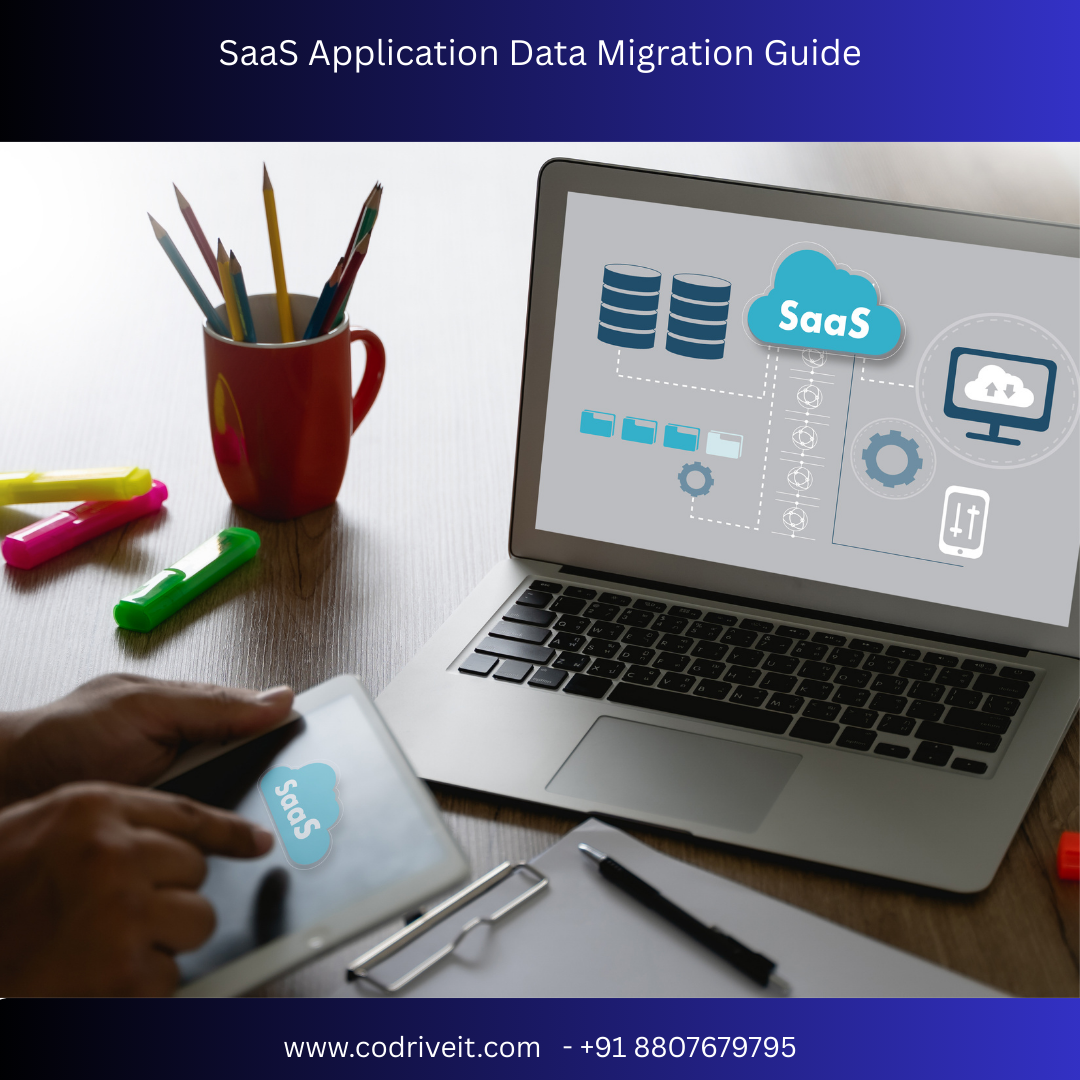
SaaS application data migration refers to the process of transferring data from on-premise systems, legacy applications, or other cloud platforms to a SaaS-based application.
This migration may involve transferring different types of data, including:
Customer and contact data
Business transactions
Documents and files
Application configurations
User accounts and permissions
Historical records and analytics data
The goal of SaaS data migration is to ensure that all necessary information is available and usable in the new cloud application.
Organizations are rapidly shifting toward SaaS solutions because they provide flexibility, scalability, and cost efficiency.
SaaS platforms eliminate the need for expensive on-premise hardware and maintenance.
Businesses can easily scale resources as their data and operations grow.
Cloud-based SaaS applications allow employees to access systems from anywhere.
SaaS providers regularly update applications with new features and security improvements.
Organizations can quickly deploy SaaS solutions without complex infrastructure setup.
SaaS migration can occur in several different scenarios depending on business needs.
Organizations move data from traditional on-premise systems to modern SaaS applications.
Businesses switch from one SaaS platform to another for better features, scalability, or cost efficiency.
Some data remains on-premise while other data is migrated to SaaS platforms.
Successful SaaS migration requires a structured approach. Below are the essential steps involved in the process.
The first step is to analyze existing systems and data sources.
Organizations should identify:
Data types and formats
Data volume
System dependencies
Integration requirements
This assessment helps determine the complexity of the migration project.
Businesses should establish clear migration objectives such as:
Improving system performance
Reducing infrastructure costs
Enhancing analytics capabilities
Modernizing business applications
Selecting the right migration strategy ensures efficient data transfer.
Data profiling helps organizations analyze the structure, quality, and relationships within datasets.
This step identifies issues such as:
Duplicate records
Missing values
Inconsistent data formats
Addressing these issues early helps improve migration success.
Data cleansing is a critical part of SaaS migration.
Tasks include:
Removing duplicate entries
Standardizing formats
Correcting invalid records
Deleting outdated information
Clean data ensures better system performance in the new SaaS platform.
Data mapping defines how fields in the source system correspond to fields in the target SaaS application.
For example:
| Source System | SaaS Application |
|---|---|
| Customer_ID | Account_ID |
| Phone_Number | Contact_Number |
| Order_Date | Transaction_Date |
Data transformation may also be required to match the SaaS system’s structure.
Before executing the full migration, organizations should run a pilot migration using sample data.
This testing helps identify:
Data mapping errors
System compatibility issues
Performance problems
Testing ensures a smoother full-scale migration.
Once testing is successful, the organization can perform the complete migration.
The process typically includes:
Extracting data from the source system
Transforming data to match the SaaS platform
Loading data into the target system
Automation tools and ETL processes are often used to streamline this stage.
After migration, organizations must verify that the data was transferred correctly.
Validation methods include:
Record count comparison
Field-level validation
Data integrity checks
Format validation
This ensures that no data was lost or corrupted during migration.
Employees should receive training on the new SaaS platform.
Training may include:
System navigation
Data management processes
Reporting and analytics features
Workflow automation tools
Proper training ensures successful adoption of the new system.
Despite its benefits, SaaS migration can present several challenges.
Different systems may use different data formats and structures.
Migrating massive datasets can require significant processing power.
Sensitive business data must be protected during migration.
The SaaS platform must integrate with other enterprise systems.
Improper planning may disrupt business operations during migration.
Organizations can improve migration success by following these best practices.
Develop a detailed migration roadmap with timelines and responsibilities.
Automation tools reduce manual errors and speed up the migration process.
Encrypt sensitive data and implement strong access controls.
Testing ensures data accuracy and system compatibility.
Continuous monitoring helps detect issues early.
A successful SaaS migration offers several advantages.
Improved operational efficiency
Enhanced system scalability
Better data accessibility
Reduced IT infrastructure costs
Faster business processes
Improved collaboration and productivity
These benefits help organizations remain competitive in the modern digital environment.
As cloud technologies evolve, several trends are shaping the future of SaaS migration.
Artificial intelligence is being used to automate data mapping and validation.
Businesses increasingly require real-time data synchronization between systems.
Modern integration platforms simplify SaaS connectivity with other systems.
Automated compliance tools ensure secure and regulated data management.
SaaS application data migration is a critical step for organizations transitioning to modern cloud-based systems. With the right strategy, businesses can move their data efficiently while maintaining accuracy, security, and system performance.
By following a structured SaaS application data migration guide, organizations can minimize risks, improve data quality, and ensure a smooth transition to new SaaS platforms.
Successful migration not only enhances operational efficiency but also empowers businesses to leverage advanced cloud capabilities for innovation and growth.