
In today’s data-driven world, organizations generate massive amounts of data from various sources such as databases, applications, APIs, cloud platforms, and IoT devices. Managing and integrating this data efficiently requires powerful automation tools. This is where Automated ETL tools play a crucial role.
ETL stands for Extract, Transform, and Load, a process used to collect data from multiple sources, transform it into a usable format, and load it into a target system such as a data warehouse or analytics platform. Automated ETL tools simplify this process by reducing manual effort, improving efficiency, and ensuring accurate data integration.
In this blog, we will explore the concept of automated ETL tools, their importance, key features, and a detailed comparison to help organizations choose the best solution for their data integration needs.
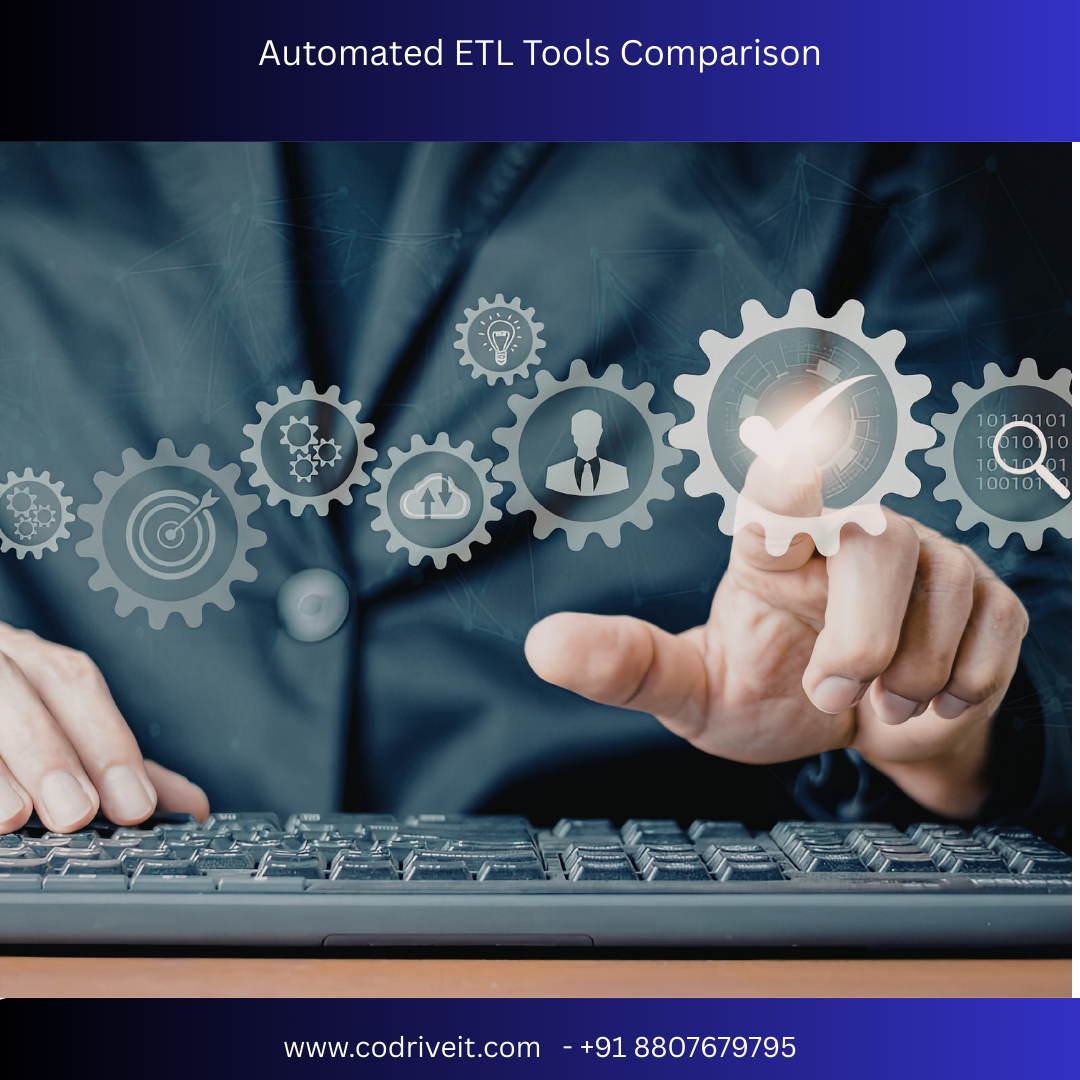
Automated ETL tools are software platforms designed to automate the process of extracting data from different sources, transforming it according to business rules, and loading it into target systems.
These tools eliminate the need for manual coding and provide features such as:
Automated data pipelines
Data transformation workflows
Data quality checks
Error handling and monitoring
Real-time or batch processing
Automated ETL tools help businesses streamline data migration, data integration, and analytics workflows.
Traditional data integration processes often involve manual scripting and complex workflows. Automated ETL tools offer several advantages that make them essential for modern organizations.
Automated workflows reduce manual intervention and speed up data processing.
Built-in validation and transformation rules ensure high-quality data.
Automated ETL platforms can handle large volumes of data across multiple systems.
Clean and integrated data enables organizations to generate accurate insights and reports.
Automation minimizes the need for extensive manual development and maintenance.
When evaluating ETL tools, organizations should consider several essential features.
The tool should support connections to multiple data sources such as databases, cloud storage, APIs, and enterprise applications.
Advanced transformation features allow organizations to clean, format, and enrich data.
Automated workflows and scheduling features help streamline data pipelines.
Built-in validation and error detection ensure accurate data processing.
The ETL tool should handle large datasets efficiently without performance issues.
Security features such as encryption, access controls, and compliance support are critical for sensitive data.
Below is a comparison of some widely used automated ETL tools used by businesses worldwide.
| ETL Tool | Key Features | Best For | Advantages |
|---|---|---|---|
| Talend | Open-source integration, data quality tools | Data integration projects | Flexible and scalable |
| Informatica PowerCenter | Enterprise-grade ETL platform | Large enterprises | High performance and reliability |
| Microsoft Azure Data Factory | Cloud-based data integration | Cloud environments | Seamless Azure integration |
| Apache NiFi | Real-time data flow automation | Streaming data pipelines | Strong automation capabilities |
| AWS Glue | Serverless ETL service | AWS cloud environments | Fully managed service |
| Pentaho Data Integration | Visual ETL workflows | Mid-sized organizations | Easy-to-use interface |
Each tool offers unique capabilities depending on business requirements and infrastructure.
Selecting the right ETL solution depends on several factors.
Organizations dealing with large datasets should choose highly scalable ETL platforms.
Some tools are optimized for cloud environments, while others support on-premise deployments.
The ETL tool must support the data sources and systems used by the organization.
Costs can vary significantly depending on the tool and licensing model.
Some tools require advanced technical knowledge, while others provide user-friendly visual interfaces.
Implementing automated ETL solutions offers several benefits for businesses.
Faster data integration
Improved data quality
Reduced manual errors
Better data governance
Enhanced analytics capabilities
Scalable data processing infrastructure
These advantages make automated ETL tools a key component of modern data management strategies.
Despite their benefits, organizations may face certain challenges when implementing ETL tools.
Poor data quality from source systems can affect ETL processes.
Connecting multiple systems with different formats can be complex.
Large-scale ETL jobs may require optimization to maintain performance.
Handling sensitive data requires strong security and compliance measures.
Addressing these challenges requires proper planning and tool selection.
To maximize the benefits of ETL automation, organizations should follow these best practices.
Understanding business objectives helps in selecting the right ETL solution.
Ensure that validation rules are applied throughout the ETL pipeline.
Use monitoring dashboards to track performance and detect errors.
Regularly optimize workflows to improve processing speed and efficiency.
Document ETL processes, transformations, and data flows for better governance.
As technology evolves, automated ETL tools are becoming more advanced with new capabilities.
Artificial intelligence is being used to automate data transformation and quality management.
Organizations increasingly require real-time data pipelines for instant insights.
Cloud-based ETL tools are gaining popularity due to scalability and flexibility.
ETL processes are becoming part of modern DataOps frameworks for better collaboration and automation.
Automated ETL tools are essential for modern organizations that rely on large-scale data integration and analytics. These tools streamline the process of extracting, transforming, and loading data from multiple sources while ensuring high data quality and efficiency.
Choosing the right ETL solution depends on factors such as infrastructure, data volume, integration requirements, and business goals. By carefully evaluating available options and implementing best practices, organizations can build reliable data pipelines that support advanced analytics and informed decision-making.
Investing in the right automated ETL tools helps businesses unlock the full value of their data while improving operational efficiency and scalability.