
In today’s data-driven business environment, organizations frequently migrate data from legacy systems to modern platforms such as cloud databases, ERP systems, and CRM solutions. However, one of the most critical components of a successful migration project is data mapping. Without proper mapping, data can become inconsistent, incomplete, or even lost during the migration process.
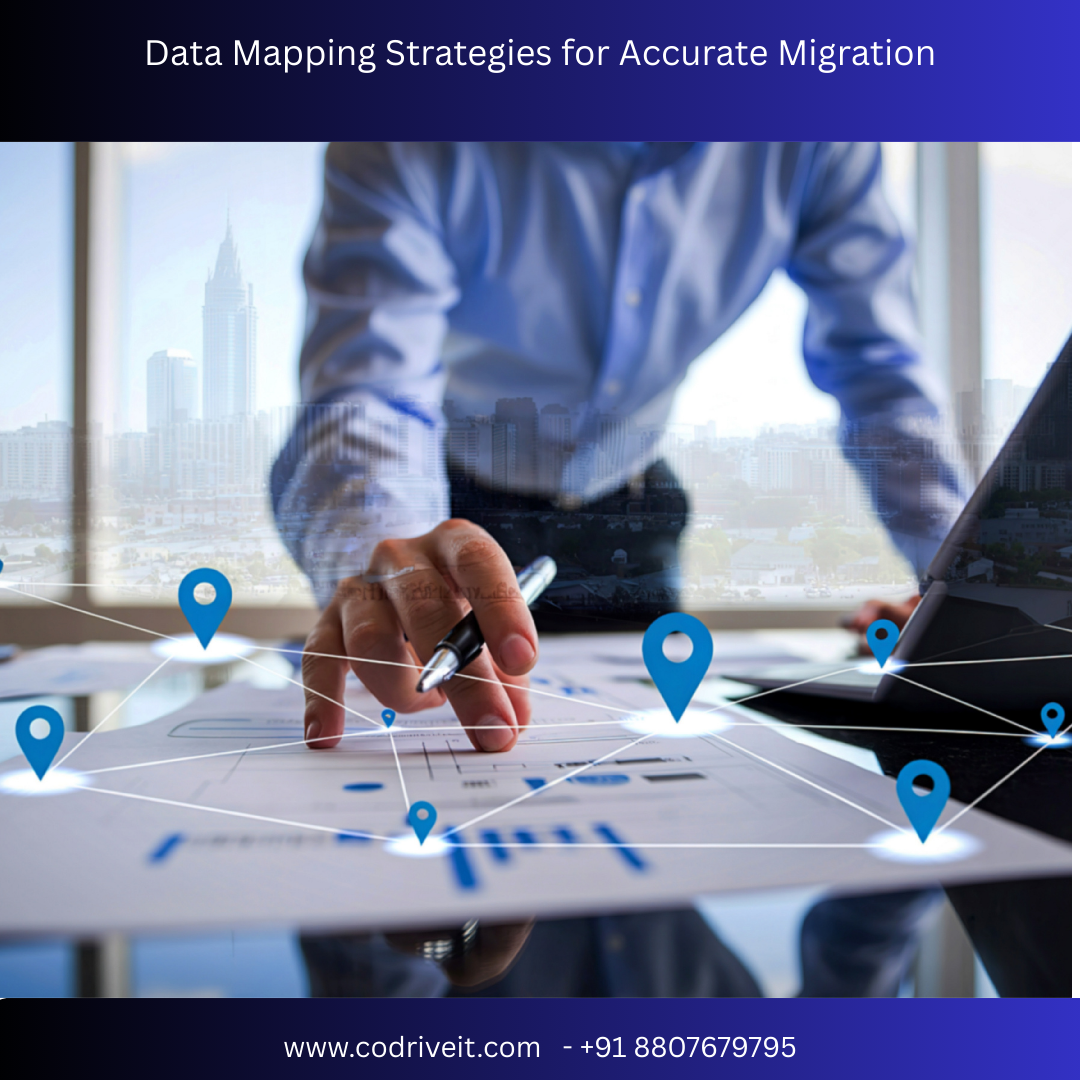
Data Mapping Strategies for Accurate Migration ensure that data from the source system correctly aligns with the structure of the target system. By implementing effective mapping strategies, businesses can maintain data integrity, reduce errors, and achieve seamless system transitions.
This guide explains the importance of data mapping, common challenges, and the best strategies to ensure accurate and reliable data migration.
Data mapping is the process of connecting data fields from a source database to corresponding fields in a target database during data migration. It defines how information such as customer records, financial transactions, inventory details, and other business data should be transferred between systems.
For example, a field called “Customer Name” in the old system may need to map to “Client Name” in the new system. Proper mapping ensures that data is transferred correctly and remains usable in the new platform.
Data mapping is a fundamental step in migration projects because it directly affects data accuracy and system functionality after migration.
Data mapping plays a crucial role in ensuring the success of data migration projects. Without proper mapping, organizations may face data inconsistencies, operational disruptions, and reporting errors.
Key reasons why data mapping is essential include:
Proper mapping guarantees that each piece of data is transferred to the correct destination field.
It ensures that relationships between different datasets remain intact.
Mapping aligns the structure of legacy data with the architecture of the new system.
Well-defined mapping rules minimize data loss and duplication.
Accurate data mapping ensures that reporting and analytics systems function correctly after migration.
Despite its importance, data mapping can be challenging, especially in complex migration projects.
Some common issues include:
Differences in database structures between systems
Missing or incomplete data fields
Inconsistent data formats
Large volumes of unstructured data
Complex relationships between datasets
Addressing these challenges requires careful planning and a structured approach.
Organizations can implement several strategies to ensure accurate data mapping during migration.
Before starting the migration process, organizations should analyze both the source and target systems. Understanding data structures, formats, and relationships helps create accurate mapping rules.
Data analysis also helps identify redundant, outdated, or irrelevant data that should not be migrated.
A data mapping document defines how each field from the source system corresponds to fields in the target system.
This document typically includes:
Source field names
Target field names
Data types
Transformation rules
Validation requirements
A well-prepared mapping document acts as a blueprint for the entire migration process.
Modern data migration tools provide automated data mapping features that simplify the migration process.
These tools can:
Detect field similarities
Suggest mapping relationships
Automate data transformation
Reduce manual errors
Automation improves efficiency and accuracy in large-scale migration projects.
Sometimes data must be modified before it fits into the new system. Data transformation rules help convert data into compatible formats.
Examples include:
Converting date formats
Changing currency formats
Combining or splitting data fields
Standardizing text values
Proper transformation ensures compatibility between systems.
Test migrations allow organizations to validate mapping rules before the final migration.
During testing, teams can:
Verify that data appears correctly in the new system
Identify mapping errors
Adjust transformation rules
Ensure relationships between datasets remain intact
Testing significantly reduces migration risks.
After migration, data validation ensures that the transferred data is accurate and complete.
Validation processes include:
Checking record counts between systems
Verifying key fields and relationships
Ensuring no data is missing or duplicated
These checks confirm that the migration process was successful.
To achieve reliable data migration results, organizations should follow these best practices:
Clean and standardize data before mapping
Maintain clear documentation for mapping rules
Use reliable migration tools and technologies
Involve domain experts who understand the data
Perform multiple testing cycles before final migration
Implement strong data governance policies
Following these practices helps ensure a smooth and accurate migration process.
Implementing effective data mapping strategies provides several advantages.
Accurate mapping ensures clean and reliable datasets in the new system.
Structured mapping reduces delays and technical issues.
Proper mapping prevents data loss and system disruptions.
High-quality data improves analytics, forecasting, and reporting.
Well-mapped data integrates easily with other business applications.
Due to the complexity of enterprise systems, many organizations rely on professional data migration experts to manage mapping processes.
Professional migration specialists help with:
Designing detailed data mapping frameworks
Implementing automated mapping tools
Handling complex data transformations
Ensuring data accuracy and security
Completing migration projects with minimal downtime
Their expertise ensures that organizations can move to new systems without compromising data quality.
Data mapping is one of the most critical elements of successful data migration. By accurately connecting source data fields with target system structures, organizations can ensure smooth system transitions and maintain data integrity.
Implementing strong data mapping strategies for accurate migration helps prevent data loss, improve data quality, and enable efficient business operations in the new system.
As businesses continue adopting modern digital platforms, effective data mapping will remain a key factor in successful digital transformation and long-term data management.