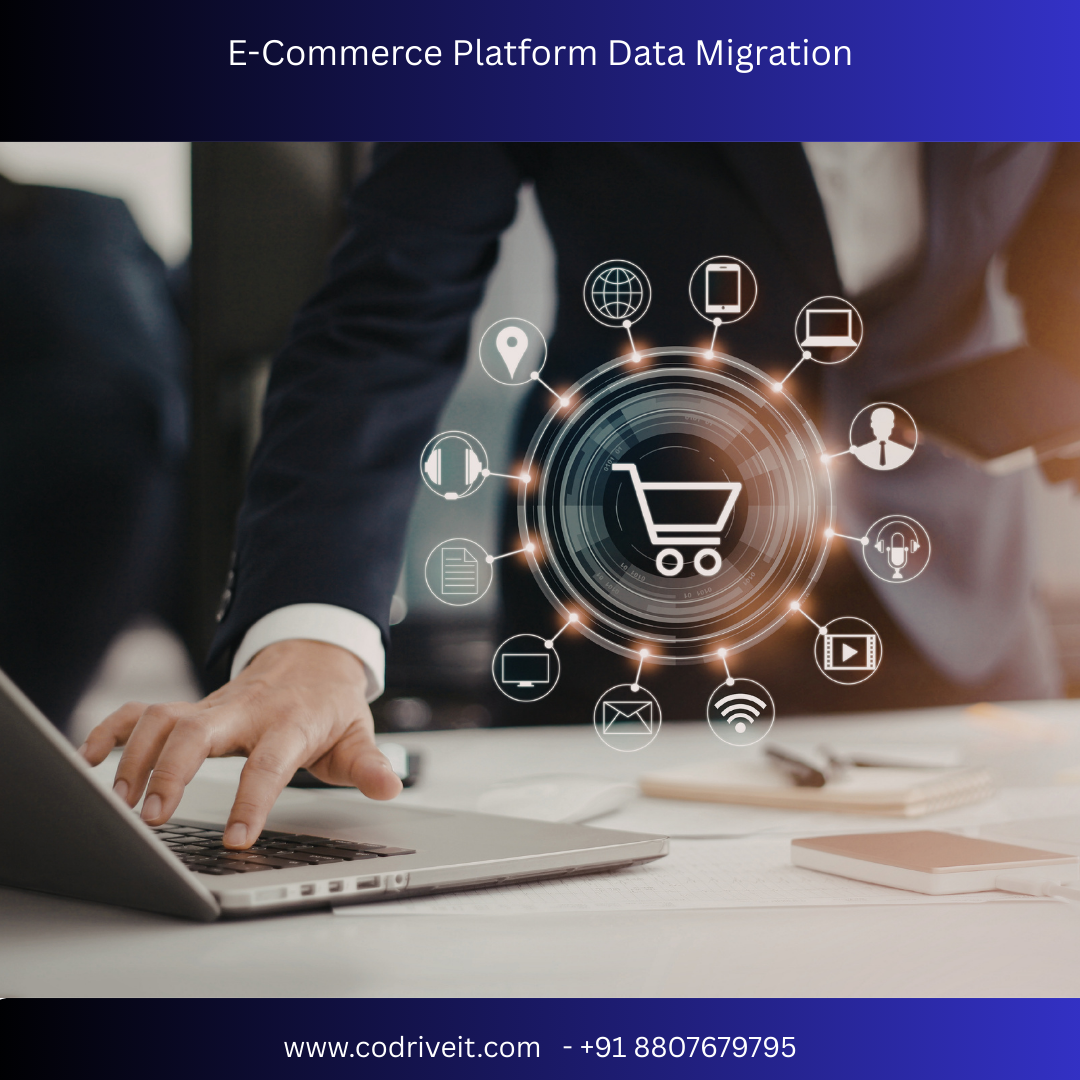

In today’s competitive digital marketplace, businesses must continuously upgrade their technology to meet growing customer expectations. Whether switching platforms, upgrading systems, or moving to the cloud, E-Commerce Platform Data Migration plays a crucial role in ensuring seamless growth without disrupting operations.
A well-planned migration strategy ensures zero data loss, minimal downtime, improved performance, and enhanced security.
This comprehensive SEO-optimized guide explains everything you need to know about migrating your e-commerce platform safely and efficiently.
E-commerce data migration is the process of transferring business-critical data from one e-commerce platform to another. This includes:
Product catalogs
Customer accounts
Order history
Inventory data
Payment records
Reviews & ratings
SEO metadata
Pricing and promotional rules
Migration typically occurs when businesses move between platforms such as:
Shopify
WooCommerce
Magento
BigCommerce
Businesses migrate platforms for several reasons:
Scalability limitations
Performance issues
High maintenance costs
Poor integration capabilities
Limited customization
Security vulnerabilities
Expanding to global markets
Upgrading to a modern e-commerce platform enhances user experience, supports omnichannel selling, and improves operational efficiency.
Missing product data or customer records can severely impact business operations.
Improper URL mapping may cause search engine ranking losses.
Website downtime results in lost sales and customer trust.
E-commerce stores handling card payments must comply with:
Payment Card Industry Data Security Standard (PCI DSS)
General Data Protection Regulation (GDPR)
E-commerce platforms often connect with:
Payment gateways
Shipping providers
CRM systems
ERP software
Marketing tools
Start with a detailed assessment:
Identify all data assets
Clean duplicate or outdated data
Audit third-party integrations
Review current SEO structure
Define migration scope & timeline
Clear planning prevents unexpected disruptions.
Before initiating migration:
Create full database backup
Backup product images and media files
Save theme files and custom code
Store backup securely (preferably offsite)
This ensures recovery in case of unexpected issues.
Data security is critical during migration. Implement:
SSL/TLS encryption
Role-based access control (RBAC)
Multi-factor authentication (MFA)
Secure staging environments
Follow cybersecurity standards recommended by National Institute of Standards and Technology (NIST).
Map source data fields to the target platform:
Product categories
SKU codes
Customer profiles
Order details
Tax settings
Shipping rules
Use automated migration tools to reduce manual errors and ensure data consistency.
SEO is critical for e-commerce businesses.
Maintain URL structure if possible
Set up 301 redirects
Preserve meta titles & descriptions
Update XML sitemaps
Monitor rankings post-launch
Improper SEO handling can significantly impact organic traffic.
Before going live:
Verify product listings
Check inventory counts
Test checkout process
Validate payment gateways
Perform load testing
Conduct user acceptance testing (UAT)
Ensure the new platform performs efficiently under real-world conditions.
After launch:
Monitor server performance
Track conversion rates
Check analytics data
Conduct security scans
Monitor SEO rankings
Continuous monitoring ensures long-term success.
| Benefit | Impact |
|---|---|
| Faster Website Performance | Higher conversion rates |
| Better Security | Reduced cyber risks |
| Improved Scalability | Supports growth |
| Enhanced User Experience | Higher customer satisfaction |
| Advanced Integrations | Operational efficiency |
| Cloud Readiness | Cost-effective infrastructure |
Many businesses move to cloud-based platforms for:
High availability
Automatic scaling
Global content delivery
Reduced infrastructure costs
Disaster recovery capabilities
Cloud migration supports seasonal traffic spikes and global expansion.
Product data mismatch
Broken URLs
Payment failures
Inventory sync errors
Data corruption
Cybersecurity breaches
Detailed migration checklist
Secure encryption protocols
Staged testing environments
Backup & rollback plan
Post-migration audits
Look for providers offering:
Proven platform expertise
Zero data loss assurance
SEO migration experience
Compliance knowledge (PCI DSS, GDPR)
End-to-end encryption
Post-migration technical support
Performance optimization services
An experienced migration partner minimizes risk and accelerates transition.
AI-powered product data mapping
Real-time inventory synchronization
Headless commerce architectures
API-driven integrations
Advanced fraud detection systems
Omnichannel unified data platforms
Digital commerce continues evolving, making platform modernization essential.
E-Commerce Platform Data Migration is more than just transferring data — it’s a strategic transformation that impacts performance, security, SEO, and customer experience.
With proper planning, encryption, compliance, testing, and monitoring, businesses can migrate seamlessly with:
Zero data loss
Minimal downtime
Preserved SEO rankings
Improved scalability
Enhanced customer trust
In today’s fast-paced digital economy, secure and scalable e-commerce data migration is the foundation of sustainable growth.