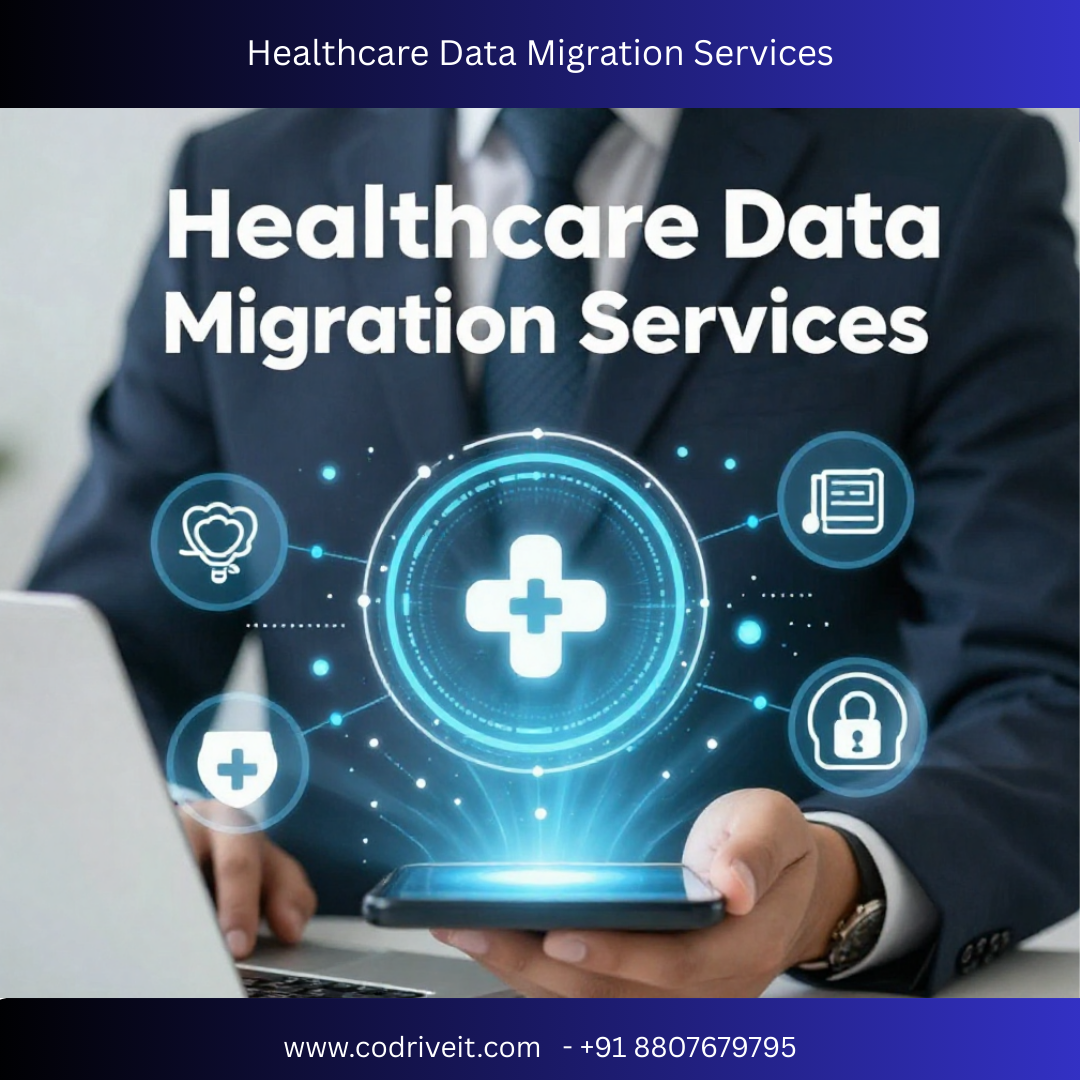

Healthcare organizations are rapidly modernizing their IT infrastructure to improve patient care, streamline operations, and meet regulatory requirements. As hospitals, clinics, and diagnostic centers upgrade systems or move to the cloud, healthcare data migration services play a critical role in ensuring secure, accurate, and compliant data transfer.
In this comprehensive guide, we’ll explore healthcare data migration, key challenges, compliance requirements, best practices, and how to choose the right migration partner.
Healthcare data migration services involve securely transferring medical and administrative data from legacy systems to modern platforms such as:
Electronic Health Records (EHR) systems
Electronic Medical Records (EMR) systems
Hospital Management Systems (HMS)
Cloud healthcare platforms
Data warehouses and analytics systems
Migration includes sensitive information like:
Patient medical records
Lab reports and imaging data
Billing and insurance details
Appointment histories
Prescription records
Because healthcare data is highly sensitive, migration must prioritize security, compliance, and data integrity.
Healthcare institutions are transitioning from outdated systems to advanced digital platforms to achieve:
Faster access to patient information
Improved clinical decision-making
Regulatory compliance
Better interoperability
Reduced operational costs
Enhanced patient experience
Modern healthcare systems often integrate AI, telemedicine, and analytics — which require clean, structured, and accessible data.
Healthcare data is a prime target for cyberattacks. Any breach can result in legal penalties and loss of patient trust.
Healthcare providers must comply with regulations such as:
Health Insurance Portability and Accountability Act (HIPAA)
General Data Protection Regulation (GDPR)
Health Information Technology for Economic and Clinical Health Act (HITECH Act)
Non-compliance can lead to severe financial penalties.
Incorrect patient records can directly impact treatment decisions.
Hospitals cannot afford interruptions during migration.
Different systems use different data formats, making integration complex.
Transitioning from one EHR platform to another.
Moving on-premise healthcare infrastructure to secure cloud environments.
Upgrading legacy databases to modern platforms for better performance.
Combining healthcare systems after hospital mergers.
Identify critical patient data
Classify sensitive information
Remove duplicate and outdated records
Map data fields between systems
A well-defined migration strategy reduces risks.
Encrypt data in transit (TLS/SSL)
Encrypt data at rest
Use secure key management systems
Encryption prevents unauthorized access during migration.
Healthcare migration must include:
Audit logs
Access control policies
Data minimization
Secure backups
Compliance documentation
Security frameworks from National Institute of Standards and Technology (NIST) can guide secure implementation.
Limit system access to authorized personnel only. Apply:
Multi-factor authentication (MFA)
Temporary privileged accounts
Activity monitoring
Before going live:
Verify patient records
Match billing data
Cross-check lab and imaging reports
Conduct user acceptance testing (UAT)
Data integrity is critical in healthcare environments.
Healthcare providers should use:
Parallel system testing
Phased migration approach
Real-time replication
Cutover planning
This ensures uninterrupted patient care.
Follow the 3-2-1 backup strategy:
3 copies of data
2 different storage formats
1 offsite backup
Test restoration procedures before final cutover.
| Benefit | Impact |
|---|---|
| Improved Patient Safety | Accurate medical records |
| Regulatory Compliance | Avoid penalties |
| Enhanced Security | Reduced cyber risk |
| Better Interoperability | Seamless data sharing |
| Scalable Infrastructure | Supports growth |
| Faster Access to Data | Improved clinical decisions |
Cloud migration offers:
Scalability
Disaster recovery capabilities
High availability
Advanced security controls
However, healthcare cloud environments must follow strict compliance and encryption standards to protect patient data.
Data loss
Data corruption
Unauthorized access
Ransomware attacks
Compliance violations
Detailed planning
Secure encryption
Real-time monitoring
Post-migration audits
Independent security testing
Look for providers that offer:
Healthcare domain expertise
Proven compliance knowledge
Zero data loss assurance
End-to-end encryption
Secure migration tools
Post-migration support
Disaster recovery planning
Healthcare migration requires both technical expertise and regulatory understanding.
AI-driven data validation
Blockchain for medical record security
Real-time health data integration
Advanced interoperability standards
Predictive analytics integration
Digital transformation in healthcare continues to accelerate, making secure migration services essential.
Healthcare data migration services are vital for hospitals and medical institutions modernizing their systems. With proper planning, encryption, compliance adherence, and validation testing, organizations can ensure secure, accurate, and zero-downtime data transitions.
A successful healthcare data migration ensures:
Patient data protection
Regulatory compliance
Improved clinical efficiency
Business continuity
Long-term scalability
In today’s digital healthcare ecosystem, secure data migration is not optional — it’s a necessity.