
In today’s data-driven world, businesses frequently migrate data between systems—whether moving from legacy ERP to cloud platforms, upgrading databases, or consolidating multi-location operations. However, when personal data of EU citizens is involved, compliance with the General Data Protection Regulation (GDPR) becomes mandatory.
Failing to comply during data migration can result in heavy penalties, reputational damage, and legal action. This comprehensive guide explains how to ensure GDPR compliance in data migration while protecting sensitive information and maintaining operational continuity.

The GDPR, enforced since May 25, 2018, governs how organizations collect, store, process, and transfer personal data of individuals within the European Union (EU).
During data migration, organizations often:
Transfer large volumes of personal data
Move data across borders
Integrate with third-party systems
Restructure or cleanse datasets
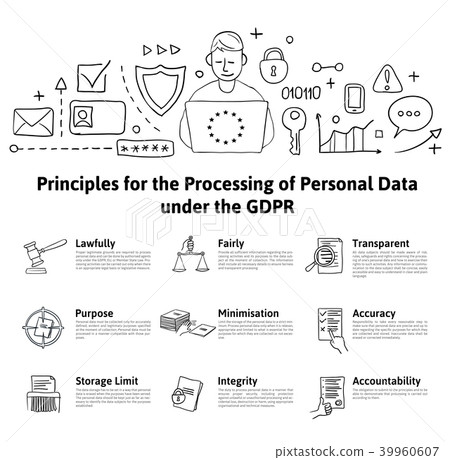
Each of these actions must align with GDPR principles such as lawfulness, transparency, data minimization, and integrity.
Understanding GDPR principles is critical before starting any migration project.
You must have a lawful basis for processing personal data during migration. Inform users if required.
Data should only be migrated if it serves a legitimate, defined purpose.
Avoid migrating unnecessary or outdated personal data.
Ensure data is clean and accurate before migration.
Do not retain data longer than necessary.
Use encryption, access controls, and secure transfer protocols.
Before migration:
Identify personal data
Classify sensitive data
Locate high-risk datasets
Document processing purposes
A data mapping exercise ensures visibility and accountability.
A DPIA helps assess risks to individuals' rights. It is mandatory when migration involves:
Large-scale personal data
Sensitive data (health, financial, biometric)
Cross-border transfers
Common lawful bases:
Consent
Contractual necessity
Legal obligation
Legitimate interest
Document everything for audit purposes.
Implement:
End-to-end encryption
Secure APIs
VPN or SSL/TLS protocols
Role-based access control (RBAC)
Data masking during testing
Never migrate data through unsecured channels.
If using cloud providers or migration tools:
Sign Data Processing Agreements (DPAs)
Verify vendor GDPR compliance
Ensure international transfer safeguards (SCCs)
Even during migration, individuals must be able to:
Access their data
Request corrections
Request deletion (Right to be Forgotten)
Restrict processing
Migration should not disrupt these rights.
Organizations often face these compliance challenges:
| Risk | Impact |
|---|---|
| Unencrypted backups | Data breach penalties |
| Migrating obsolete data | Non-compliance with minimization |
| Cross-border transfer without safeguards | Legal violations |
| Incomplete audit trails | Accountability issues |
| Improper access control | Internal data leaks |
Develop a documented migration strategy including compliance checkpoints.
Remove redundant, obsolete, and trivial (ROT) data.
Choose GDPR-compliant migration software with encryption and logging features.
Avoid using real personal data in testing environments.
Conduct:
Security audits
Compliance verification
Access control validation
Data integrity checks
Under GDPR, fines can reach:
€20 million OR
4% of annual global turnover (whichever is higher)
Non-compliance during migration can trigger investigations if data breaches occur.
GDPR-compliant data migration is especially critical in:
Healthcare
Banking & Financial Services
E-commerce
SaaS platforms
Government institutions
Any organization handling EU personal data must comply.
Cloud migrations introduce additional concerns:
Data residency requirements
Multi-region storage risks
Shared responsibility models
Vendor access controls
Ensure cloud providers offer:
EU data centers
Encryption at rest and in transit
Detailed logging and audit trails
GDPR compliance in data migration is not just a legal requirement—it’s a strategic necessity. A well-planned migration process that integrates privacy-by-design principles protects both the organization and its customers.
By implementing strong security controls, minimizing data exposure, and maintaining transparency, businesses can achieve seamless, secure, and compliant data migration.