

Migrating databases from Microsoft SQL Server to MySQL is a strategic move for businesses seeking cost optimization, open-source flexibility, and cross-platform compatibility. However, a successful SQL Server to MySQL migration requires careful planning, data validation, schema transformation, and performance tuning.
Whether you are moving enterprise workloads from Microsoft SQL Server to MySQL, this comprehensive guide explains the SQL Server to MySQL Migration Process, tools, challenges, and best practices for a seamless transition.
4
MySQL is open-source and reduces licensing costs compared to SQL Server.
Runs smoothly on Linux, Windows, and cloud environments.
Ideal for modern web and SaaS applications.
Supports replication, clustering, and cloud-native deployment.
Before starting migration:
Analyze database size
Identify dependencies
Review stored procedures and triggers
Evaluate application compatibility
Plan downtime window
Is it full migration or partial?
Is real-time replication required?
What is acceptable downtime?
A detailed migration roadmap reduces risk and performance issues.


4
SQL Server and MySQL use different:
Data types
Constraints
Indexing methods
Stored procedure syntax
Functions
| SQL Server | MySQL |
|---|---|
| INT | INT |
| DATETIME | DATETIME |
| NVARCHAR | VARCHAR |
| BIT | TINYINT(1) |
| UNIQUEIDENTIFIER | CHAR(36) |
Schema conversion tools can automate part of this process.
After schema conversion:
Extract data from SQL Server
Transform format if needed
Load into MySQL
Migration methods:
Export SQL Server data and import into MySQL.
Use migration tools for automated transfer.
For minimal downtime.
SQL Server uses T-SQL, while MySQL uses its own procedural language.
Key differences:
Variable declaration
Exception handling
Cursor syntax
Temporary tables
Built-in functions
Manual rewriting is often required for complex procedures.
Update:
Database connection strings
Queries using SQL Server-specific syntax
Pagination logic
Date functions
Identity column handling
Ensure compatibility with MySQL syntax.
Perform:
Data integrity checks
Record count comparison
Performance testing
Query optimization
User acceptance testing
Ensure no data loss or corruption during migration.
After migration:
Optimize indexes
Analyze slow queries
Adjust memory settings
Configure caching
Enable query profiling
MySQL performance tuning ensures production readiness.
Data type mismatches
Case sensitivity differences
Identity column behavior differences
Trigger and function incompatibility
Collation and character set issues
Large data volume handling
Proactive planning reduces these risks.
Popular tools include:
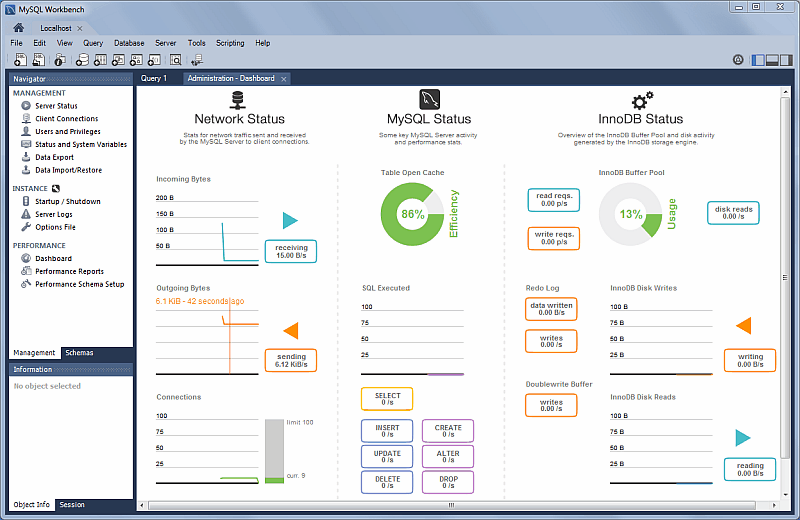
MySQL Workbench Migration Wizard
SQL Server Management Studio (SSMS)
AWS Database Migration Service (DMS)
Third-party ETL tools
Custom scripts
Choose tools based on database complexity and size.
| Feature | SQL Server | MySQL |
|---|---|---|
| License | Commercial | Open-source |
| Platform | Windows-based | Cross-platform |
| Language | T-SQL | MySQL SQL |
| Performance | Strong for enterprise | Optimized for web apps |
| Cost | Higher | Lower |
Always create full database backups.
Never migrate directly to production.
Compare row counts and data samples.
Be prepared to revert if issues occur.
Fine-tune indexes and queries.
A SaaS company migrated from Microsoft SQL Server to MySQL:
Reduced licensing costs by 45%
Improved web application performance by 30%
Achieved 99.8% uptime
Completed migration within 6 weeks
Depends on:
Database size
Number of stored procedures
Application dependencies
Downtime constraints
Typical duration:
Small database: 1–2 weeks
Medium enterprise database: 3–6 weeks
Large enterprise system: 2–3 months
SQL Server to MySQL migration can deliver significant cost savings and flexibility. However, it requires careful schema conversion, data validation, and performance tuning.
With a structured migration process, businesses can:
Reduce operational costs
Improve scalability
Enhance application performance
Modernize database infrastructure
Proper planning ensures minimal downtime and zero data loss.