
In today’s digital-first world, organizations are rapidly moving their workloads to the cloud for scalability, security, and cost efficiency. Google Cloud Data Migration plays a critical role in ensuring seamless transformation without disrupting business operations.
This comprehensive guide covers Google Cloud data migration best practices, tools, strategies, challenges, and expert tips to help your organization achieve a smooth transition
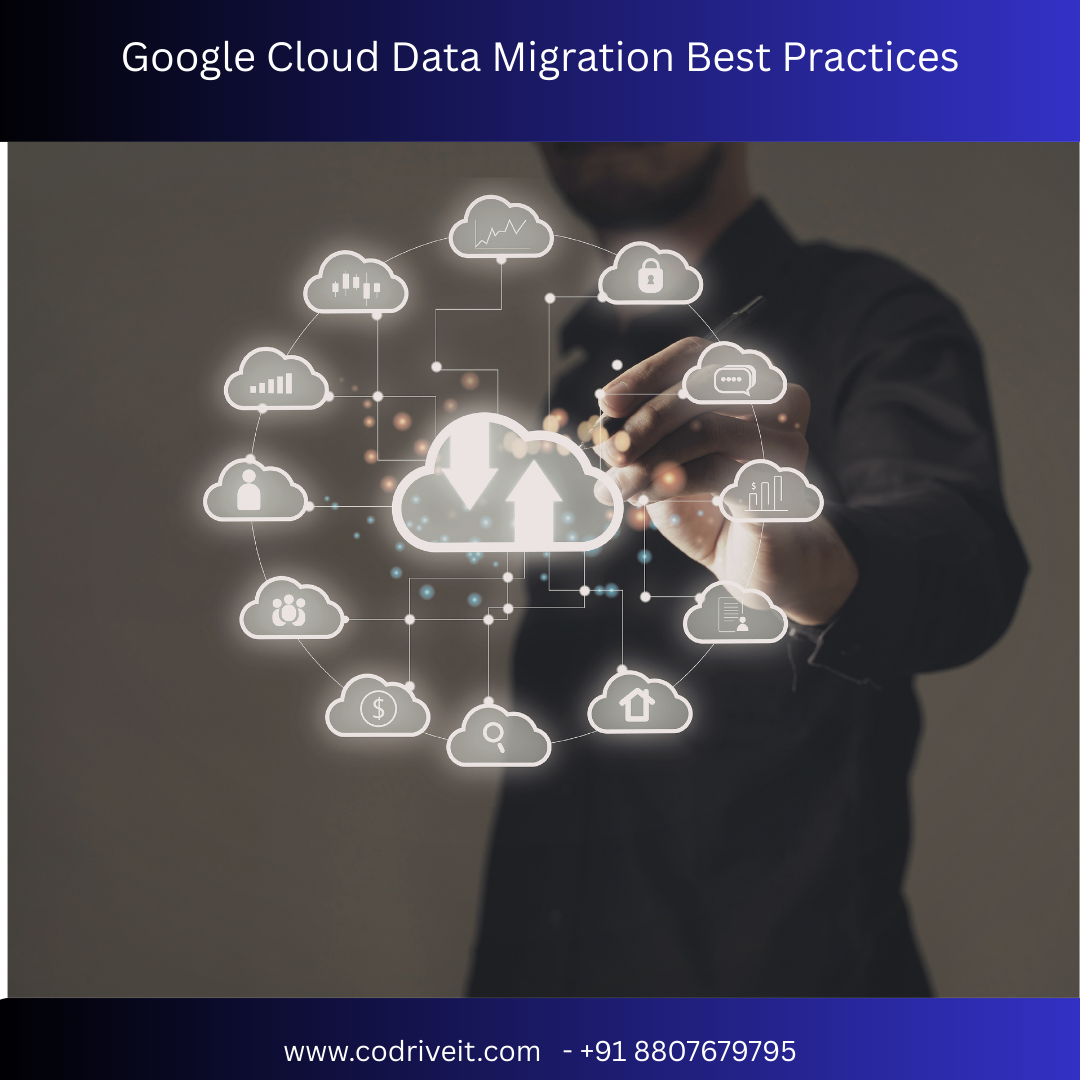
Google Cloud Data Migration is the process of transferring data, applications, and workloads from on-premises systems or other cloud platforms to Google Cloud infrastructure.
Businesses migrate to Google Cloud to leverage:
High scalability
Advanced security
AI & analytics capabilities
Cost optimization
Global infrastructure
Google Cloud Database Migration Service enables seamless migration of databases to Google Cloud with minimal downtime.
Supports:
MySQL
PostgreSQL
SQL Server
Best Practice:
Use continuous data replication to minimize downtime during cutover.
Google Transfer Appliance is ideal for transferring large volumes of data (terabytes or petabytes) securely.
Best Practice:
Use for large initial data loads when network bandwidth is limited.
Storage Transfer Service helps transfer data between:
On-prem systems
Other cloud providers
Google Cloud Storage buckets
Best Practice:
Schedule recurring transfers to sync ongoing data changes.
Before migrating:
Identify critical workloads
Analyze dependencies
Classify sensitive data
Estimate storage & compute needs
Use Google’s assessment frameworks to evaluate readiness.
Common strategies include:
Rehost (Lift & Shift) – Quick migration with minimal changes
Refactor – Modify apps to use cloud-native services
Replatform – Optimize partially during migration
Rebuild – Completely redesign application
Replace – Move to SaaS solutions
Tip: For enterprise modernization, refactoring delivers better long-term ROI.
Security is critical during migration.
Best practices:
Encrypt data in transit & at rest
Implement IAM roles properly
Enable audit logging
Follow GDPR, HIPAA, or industry compliance standards
To avoid business disruption:
Use continuous replication
Perform migration in phases
Conduct migration during low-traffic hours
Test rollback procedures
Never skip testing.
Conduct:
Functional testing
Performance testing
Security validation
Data integrity checks
Run pilot migrations before full-scale deployment.
After migration:
Monitor resource utilization
Optimize storage classes
Set up cost monitoring
Enable automated scaling
Leverage Google Cloud Monitoring tools to track performance.
Data loss risks
Application compatibility issues
Downtime concerns
Security misconfigurations
Cost overruns
Proper planning and expert guidance significantly reduce these risks.
Assessment & Planning
Tool Selection
Pilot Migration
Full Data Migration
Validation & Testing
Optimization
Global infrastructure
Advanced analytics & AI integration
High availability
Enterprise-grade security
Competitive pricing models
Google Cloud’s ecosystem supports digital transformation at scale.
Conclusion
Implementing Google Cloud Data Migration best practices ensures a secure, efficient, and cost-effective transition. By leveraging the right tools, planning strategically, and focusing on security and performance, organizations can unlock the full power of Google Cloud.
If your enterprise is planning a cloud transformation journey, adopting these best practices will help ensure long-term success and scalability.