
Data migration is a critical step in modernizing IT infrastructure, upgrading ERP systems, and moving to the cloud. While it unlocks scalability, performance, and innovation, it also comes with significant risks. Without a structured approach, businesses may experience data loss, downtime, compliance issues, or project delays.
In this comprehensive guide, we explore the most common data migration challenges and provide practical strategies to overcome them for a secure and successful migration.
Data migration is the process of transferring data from one system, database, application, or storage environment to another. It commonly occurs during:
Cloud adoption
ERP upgrades
Database modernization
Legacy system replacement
Data center relocation
When executed properly, data migration improves operational efficiency, data quality, and system performance.
Legacy systems often contain duplicate, incomplete, outdated, or inconsistent data. Migrating poor-quality data leads to inaccurate reporting and operational inefficiencies.
Conduct data profiling before migration
Remove duplicates and outdated records
Standardize formats
Implement data cleansing tools
Tip: Never migrate raw legacy data without validation.
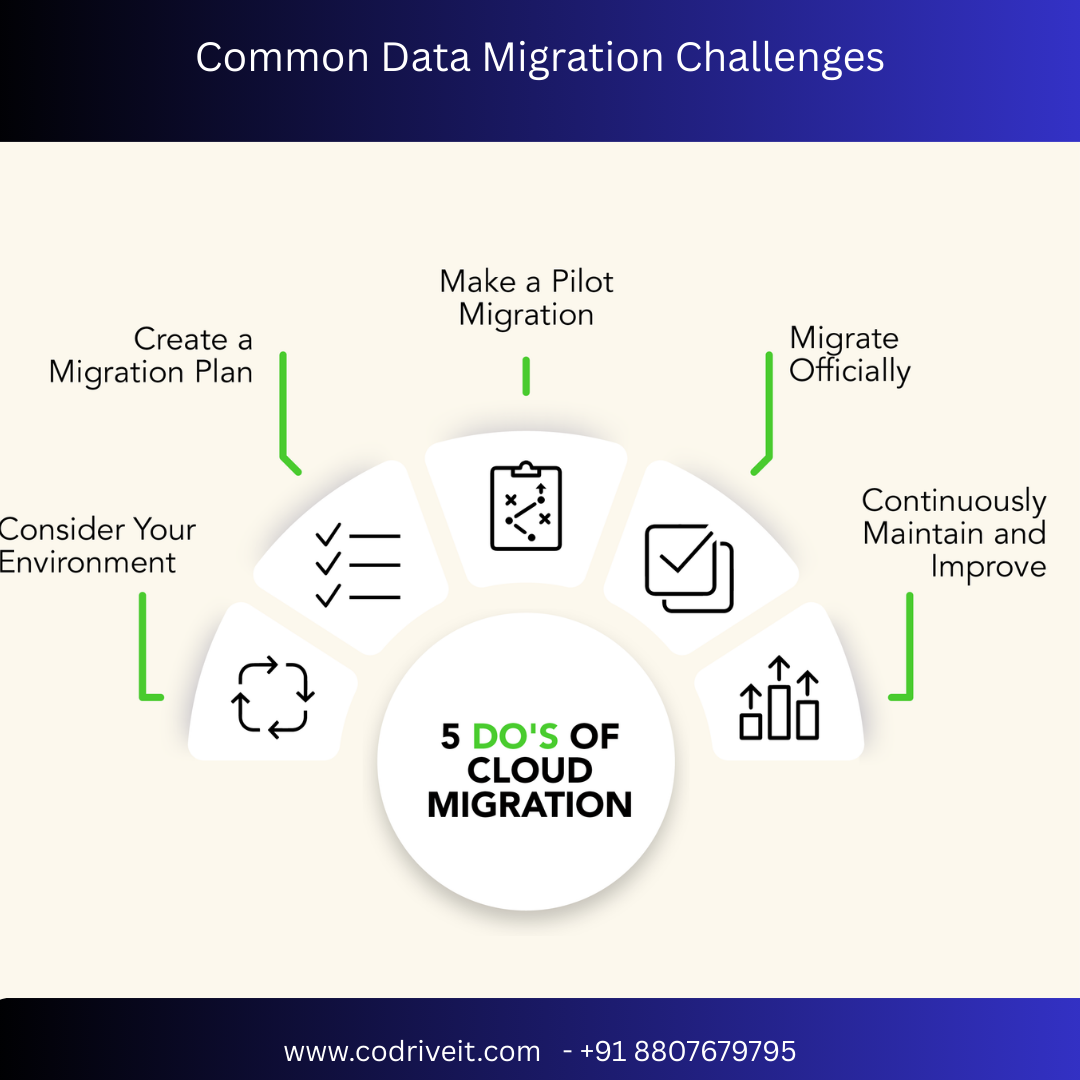
Rushing into migration without a detailed strategy results in scope creep, budget overruns, and unexpected downtime.
Define clear objectives
Create a migration roadmap
Identify stakeholders
Set measurable KPIs
Conduct risk assessment
A detailed migration plan reduces uncertainties and ensures accountability.
Incomplete transfers or technical failures may cause permanent data loss.
Perform full data backups
Use automated ETL tools
Conduct multiple test migrations
Implement rollback strategies
Data backup and validation are non-negotiable steps.
Legacy systems may use outdated formats or architectures incompatible with modern cloud or ERP platforms.
Analyze source and target schemas
Create data mapping documentation
Use transformation rules
Test sample data sets
Schema mapping ensures smooth data transformation.
Sensitive business data may be exposed during transfer, leading to security breaches or compliance violations.
Encrypt data in transit and at rest
Implement role-based access controls
Maintain audit logs
Ensure GDPR/HIPAA compliance where applicable
Security should be embedded at every migration stage.
Large-scale enterprise migrations can disrupt operations.
Use phased migration strategies
Perform parallel system operations
Schedule migration during low-traffic hours
Monitor systems in real time
Minimizing downtime protects business continuity.
Enterprises often underestimate the size and complexity of their data, causing delays and cost overruns.
Conduct comprehensive data inventory
Classify structured and unstructured data
Allocate sufficient infrastructure resources
Accurate estimation prevents bottlenecks.
Data migration requires technical expertise in databases, cloud platforms, ETL tools, and security protocols.
Hire experienced migration consultants
Use certified cloud professionals
Train internal IT teams
Expert oversight significantly reduces risk.
Skipping testing leads to post-migration system failures and inaccurate reports.
Perform unit testing
Conduct integration testing
Run user acceptance testing (UAT)
Validate data integrity
Testing ensures data consistency and system reliability.
New systems may experience slow performance or integration issues after migration.
Optimize database indexing
Monitor system performance
Tune infrastructure settings
Implement ongoing support
Continuous monitoring ensures long-term stability.
To avoid common challenges, follow these proven strategies:
Develop a comprehensive migration strategy
Cleanse and validate data before transfer
Use automated migration tools
Encrypt data for secure transfer
Test thoroughly before going live
Monitor performance post-migration
Maintain proper documentation
When challenges are addressed effectively, organizations achieve:
✅ Improved data accuracy
✅ Enhanced security and compliance
✅ Reduced operational risk
✅ Faster digital transformation
✅ Better analytics and decision-making
✅ Increased ROI from IT investments
Modern technologies are transforming migration processes through:
AI-powered automation
Real-time data synchronization
Cloud-native migration frameworks
Multi-cloud integration strategies
DevOps-based migration pipelines
Enterprises that adopt structured migration strategies gain long-term competitive advantages.
Data migration is a powerful enabler of digital transformation—but it comes with risks. Poor planning, data quality issues, security vulnerabilities, and lack of expertise can derail even the most promising IT modernization initiatives.
By understanding common data migration challenges and implementing strategic solutions, businesses can ensure a smooth, secure, and efficient transition to modern systems.
Careful planning, expert guidance, and continuous monitoring are the keys to successful data migration.